Author: Pooja Mehta

  • Best Natural Morning Drinks for Glowing Skin

    Best Natural Morning Drinks for Glowing Skin

    What Are Morning Drinks for Glowing Skin

    Glowing skin starts from inside. What you drink first thing in the morning can make a big difference in your daily energy, hydration levels, and skin freshness. Many simple Indian home drinks—like lemon water, coconut water, and herbal teas—are known to support natural glow and hydration.
    This guide lists the best natural morning drinks for glowing skin, along with how to use them, timing, real-life examples, and precautions.

    What Are Morning Drinks for Glowing Skin?

    Morning drinks for glowing skin are simple beverages prepared at home using natural ingredients like lemon, honey, turmeric, coconut, and herbs.
    They are designed to:

    • Hydrate the body
    • Support digestion
    • Reduce morning dullness
    • Give natural freshness

    These drinks are part of everyday wellness and not medical treatments.

    Benefits of Morning Skin-Glow Drinks in Daily Life

    Benefits of Morning Skin-Glow Drinks in Daily Life

    1. Improve Hydration

    Good hydration is the first step for clear and glowing skin.

    2. Support Better Digestion

    Digestion is closely linked to skin appearance. A clean gut may help skin stay fresh.

    3. Reduce Puffiness

    Warm drinks may ease bloating, while cooling drinks help reduce morning puffiness.

    4. Increase Morning Energy

    Hydrating drinks give natural energy and help your skin look less tired.

    5. Natural Detox Feel

    Many traditional drinks are believed to support natural cleansing and freshness.
    Best Natural Morning Drinks for Glowing Skin

    Best Natural Morning Drinks for Glowing Skin

    Below are the easiest and most effective skin-friendly drinks used in Indian households.

    1. Warm Lemon Water

    Lemon water is refreshing and helps the body feel light in the morning. Many people prefer it as a first drink for hydration and skin glow.

    Why it helps

    • Hydrates deeply
    • Supports digestion
    • Gives natural freshness

    2. Honey Water

    Honey water is soothing and mild, perfect for winter mornings or dry skin days.

    Why it helps

    • Natural glow support
    • Balances dryness
    • Gentle energy boost

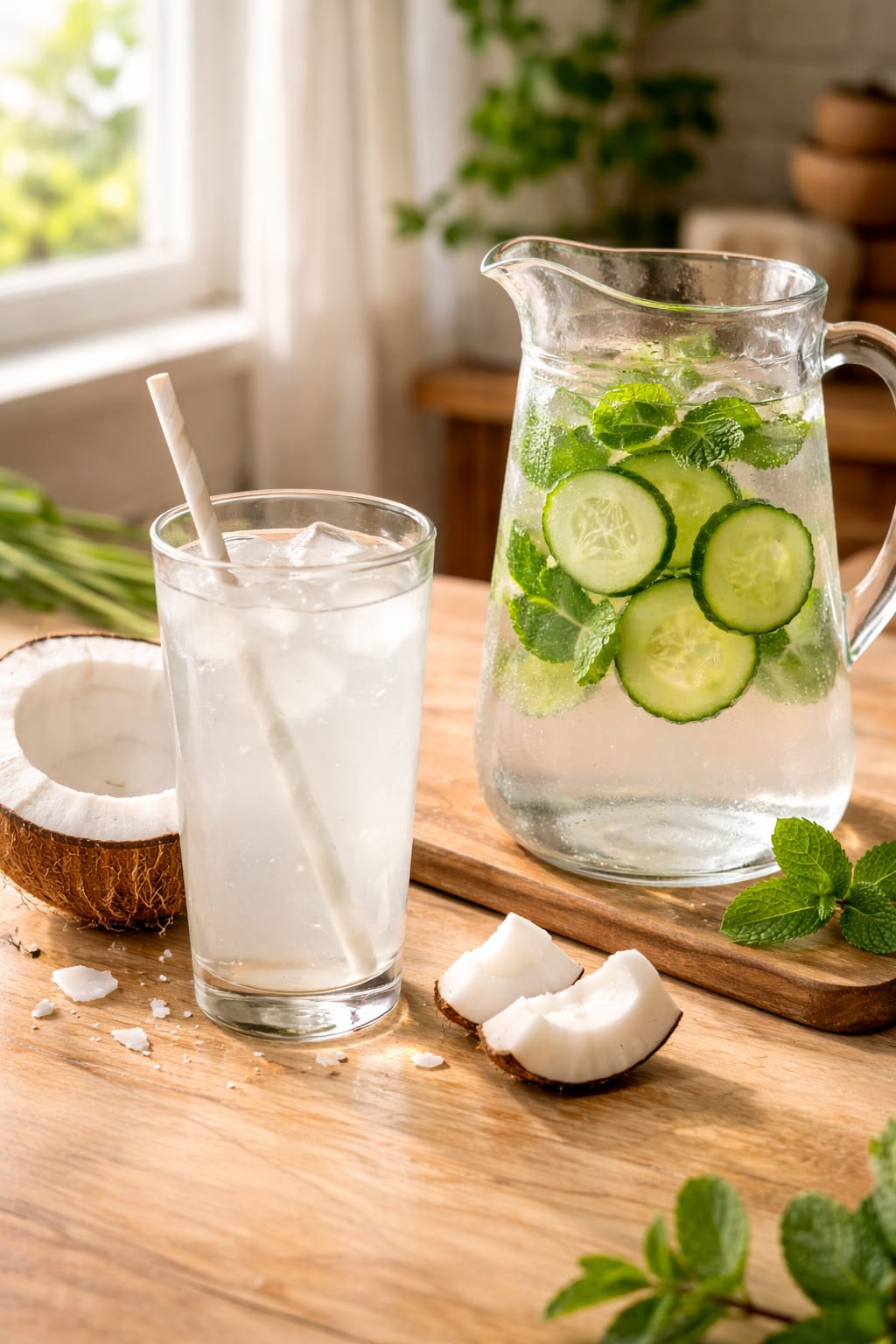
    3. Coconut Water

    Coconut water is a hydrating morning drink, especially in summer. It is commonly believed to support skin brightness.

    Why it helps

    • High natural hydration
    • Refreshes dull skin
    • Supports cooling

    4. Cucumber Water

    Cucumber-infused water feels fresh, light, and cooling. It’s great for people who wake up with puffiness.

    Why it helps

    • Reduces puffiness
    • Hydrates skin deeply
    • Light and refreshing

    5. Turmeric Water

    A traditional Indian drink used for morning routines. Add a small pinch of turmeric to warm water.

    Why it helps

    • Supports natural glow
    • Traditionally used for cleansing
    • Warms your body in winter

    6. Amla Juice (Indian Gooseberry)

    Amla is commonly linked with skin brightness and hair shine. Many people drink it first thing in the morning.

    Why it helps

    • Freshens the skin
    • Boosts energy
    • Supports digestion

    7. Ginger Tea (Mild)

    A light ginger tea helps warm the stomach and refresh the skin.

    Why it helps

    • Reduces morning heaviness
    • Supports good digestion
    • Boosts natural warmth

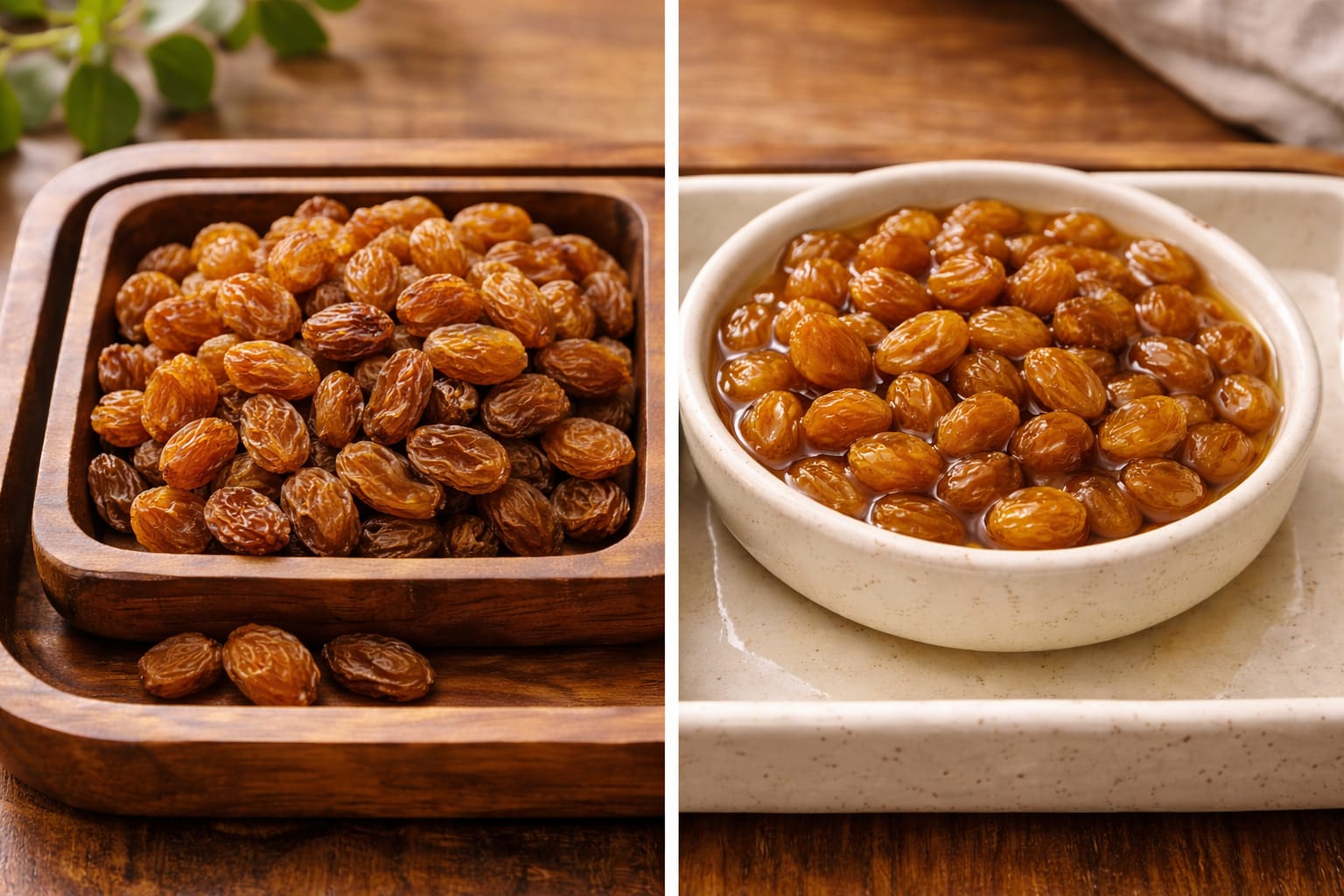
    8. Soaked Raisin Water

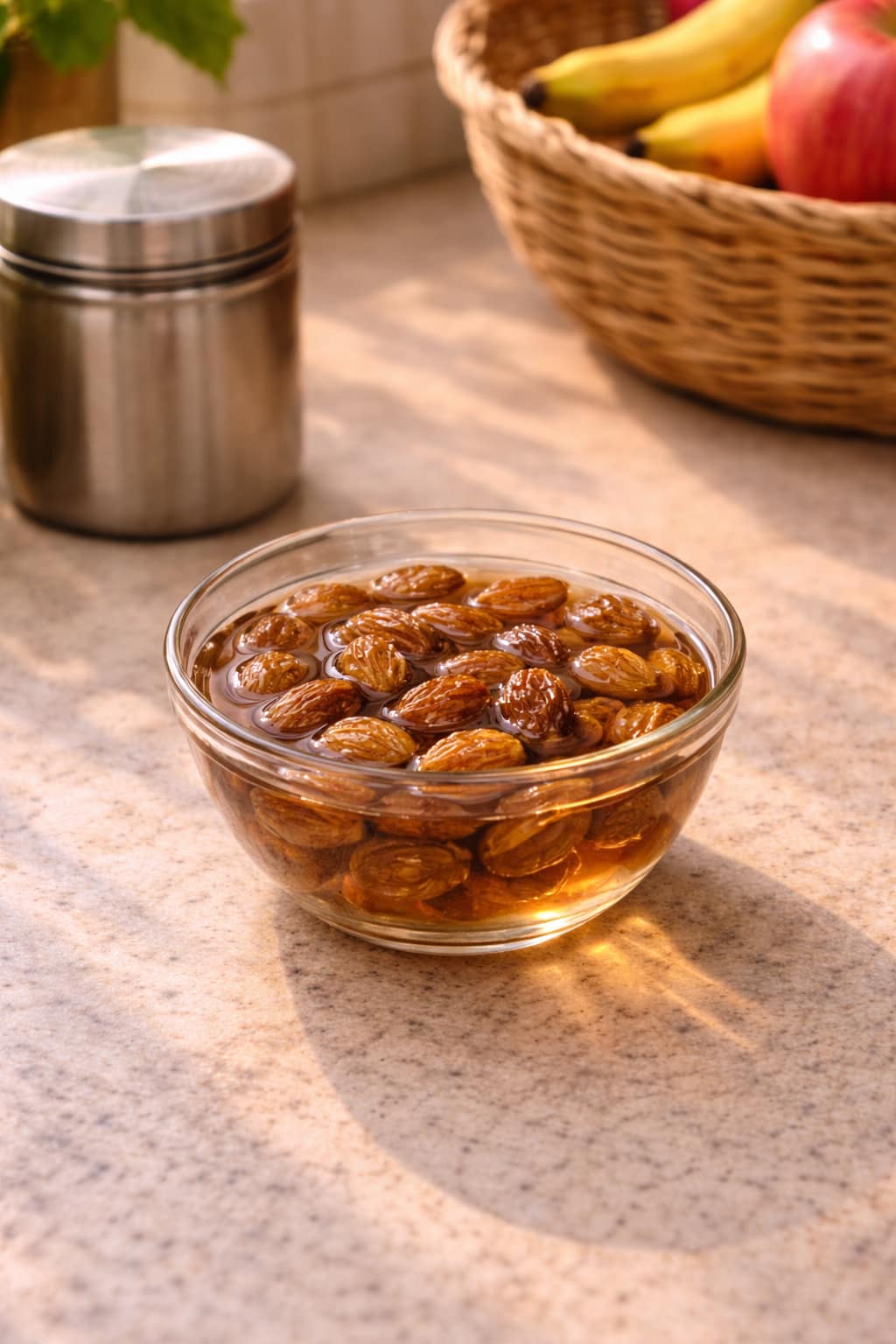
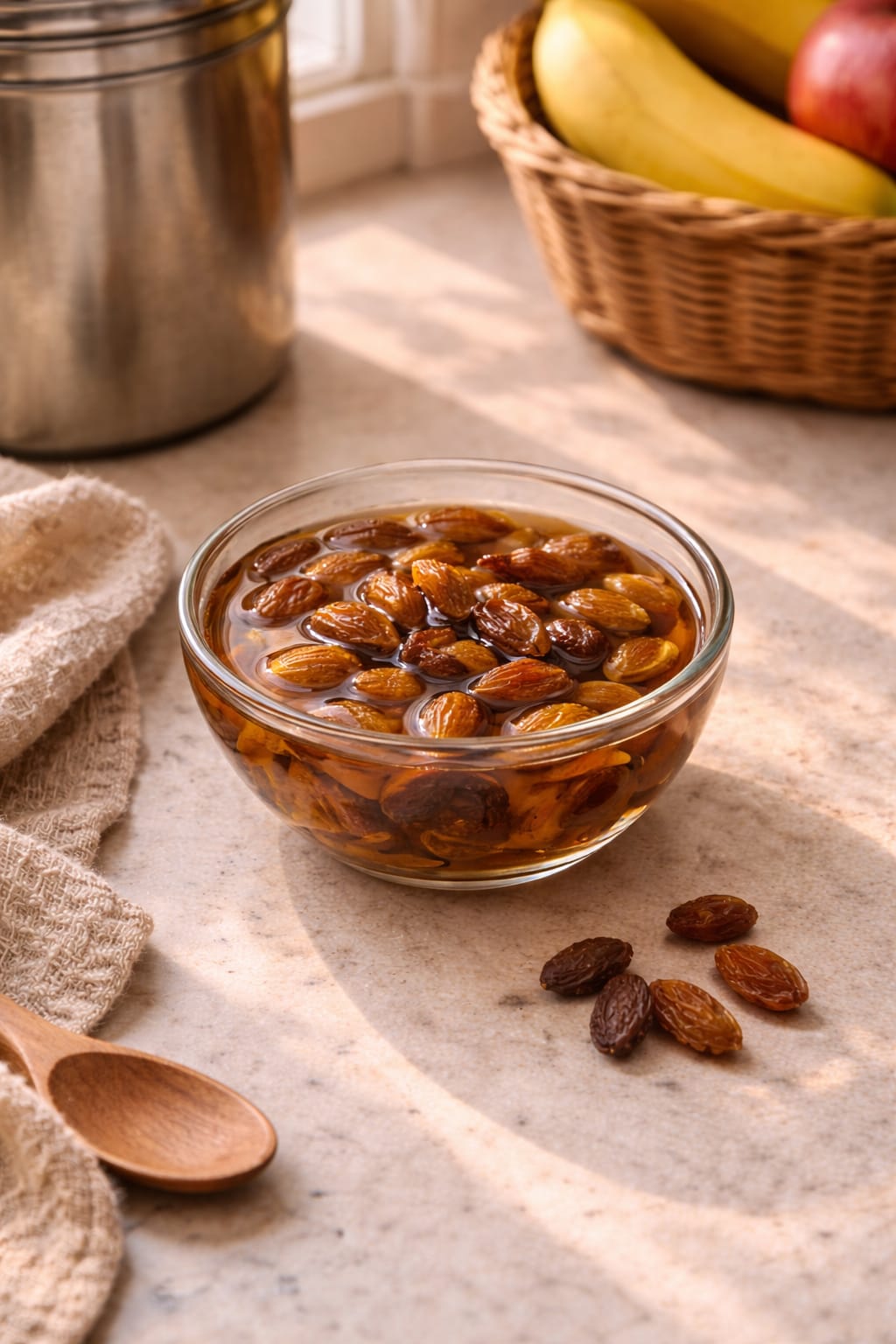
    Raisin water is a simple morning drink prepared by soaking raisins overnight. It is known for its natural sweetness and skin hydration benefits.

    Why it helps

    • Hydrates skin
    • Reduces dryness
    • Gentle on digestion

    9. Aloe Vera Juice (Homemade or Store-Bought)

    Aloe vera is widely used for skin health. Many people prefer aloe juice in the morning for hydration.

    Why it helps

    • Hydrates internally
    • Supports natural glow
    • Cooling effect

    How and When to Use These Drinks

    How and When to Use These Drinks?

    Best Time

    • First thing in the morning
    • 15–20 minutes before breakfast
    • After a light workout or yoga

    General Quantity

    1 glass per morning is enough.

    Choose drinks based on season, comfort, and taste.

    Side Effects or Things to Keep in Mind

    • Avoid very cold drinks early morning.
    • Do not overuse lemon if your stomach is sensitive.
    • Honey should not be mixed in boiling hot water.
    • Coconut water may feel too cooling in winter.
    • Amla juice can feel strong—dilute it with water.
    • If turmeric feels too strong, reduce the quantity.

    These are general lifestyle tips, not medical advice.

    Real-Life Examples & Traditional Uses

    In Indian Homes

    • Lemon water is common after late dinners.
    • Coconut water is a favourite summer drink.
    • Raisin water is often used by people with dry skin.
    • Turmeric water is part of traditional morning rituals.

    Seasonal Uses

    • Summer: Coconut water, cucumber water, aloe juice
    • Winter: Honey water, ginger tea, turmeric water
    • Monsoon: Lemon water, mild herbal drinks

    Cultural Practices

    Morning skin-friendly drinks are used in Ayurveda-inspired routines and yoga lifestyles.

    Conclusion

    Morning drinks are an easy way to support glowing skin, better hydration, and daily energy. Choose drinks based on your body type, weather, and comfort. A simple routine like lemon water in summer or honey water in winter can naturally support your skin from within.

    Frequently Asked Questions

    Q1. Can we drink these skin-glow drinks at night?

    Yes, but morning is generally better. Drinking them at night may feel heavy or affect sleep. Lemon water can feel acidic at night, while honey water can be taken in very small amounts if needed.

    Q2. Can I drink these daily?

    Yes, most of these drinks are safe for daily use. Many people rotate between lemon water, honey water, and coconut water depending on the season and personal comfort.

    Q3. Are these drinks good for skin naturally?

    Yes, these drinks may support natural skin glow by improving hydration, reducing tiredness, and helping smooth digestion. They are simple and natural lifestyle habits.

    Q4. Which drink gives the fastest glow?

    Coconut water and lemon water often give a quick fresh look, while raisin water and turmeric water are more helpful for long-term skin glow.

    Q5. Can I combine two drinks in the morning?

    Yes, you can combine drinks, but keep it simple. For example, lemon and honey water is a common combination. Avoid mixing too many ingredients at once.


  • Lemon Water vs Honey Water – Which Is Better in Morning?

    Lemon Water vs Honey Water – Which Is Better in Morning?

    What Does Lemon Water vs Honey Water Mean

    Many people in India start their morning with a simple warm drink. The two most popular choices are lemon water and honey water. Both are easy to prepare, refreshing, and commonly used in lifestyle routines for digestion, hydration, and morning energy.
    But which one is better? This article explains lemon water vs honey water in a simple and practical way so you can choose what suits your body.

    What Does Lemon Water vs Honey Water Mean?

    Lemon water is a drink made by mixing warm water with fresh lemon juice.
    Honey water is warm water mixed with pure honey.

    Both are used for:

    • Morning freshness
    • Light digestion
    • Hydration
    • Daily routine support

    They are not medical drinks but simple lifestyle habits followed in many Indian homes.

    Benefits of Lemon Water in Daily Life

    Benefits of Lemon Water in Daily Life

    1. Helps You Feel Fresh in Morning

    Lemon water gives a refreshing start to the day due to its natural citrus flavour.

    2. Supports Clean Digestion

    Most people drink lemon water to feel lighter and reduce early-morning heaviness.

    3. Good for Hydration

    Warm lemon water may encourage you to drink more water throughout the day.

    4. May Help Reduce Bloating

    Lemon water is traditionally used to ease bloating if taken before breakfast.

    5. Great in Summer

    Lemon water feels cooling and hydrating in hot weather.

    Benefits of Honey Water in Daily Life

    1. Natural Energy Boost

    Honey water provides gentle and natural morning energy, especially for people who wake up tired.

    2. Soothing for Throat

    Warm honey water is commonly used to soothe the throat and start the day calmly.

    3. Helps Control Sugar Cravings

    Honey’s sweetness reduces the desire for heavy sugary snacks in the morning.

    4. Good for Winter Mornings

    Honey water feels warm and comforting in cold weather.

    5. Gentle on Digestion

    Many people feel less acidity or discomfort when they choose honey water instead of tea or coffee.

    Comparison Table Lemon Water vs Honey Water

    Comparison Table: Lemon Water vs Honey Water

    FeatureLemon WaterHoney Water
    TasteTangy & refreshingMildly sweet
    Best SeasonSummerWinter
    Digestion FeelLight & cleansingGentle & soothing
    Morning EnergyModerateSlightly higher
    HydrationVery goodGood
    Suitable ForPeople who feel heavy in morningPeople who need energy & warmth

    How and When to Use Them?

    Best Time to Drink

    • Morning on empty stomach
    • Before breakfast
    • During slow mornings
    • After a heavy dinner (lemon water only)

    How to Drink Lemon Water

    • Warm water + half lemon
    • Drink slowly in small sips
    • Optional: add a pinch of honey (if needed)

    How to Drink Honey Water

    • Warm (NOT hot) water + 1 teaspoon honey
    • Drink in single sip or through the morning

    General Quantity

    1 cup in the morning is enough for both drinks.

    Side Effects or Things to Keep in Mind

    Side Effects or Things to Keep in Mind

    For Lemon Water

    • Too much lemon may feel acidic for some people.
    • Avoid drinking very strong lemon water.
    • Rinse mouth after drinking to avoid sourness on teeth.

    For Honey Water

    • Honey should never be mixed in boiling hot water.
    • People who don’t like sweetness may find it too strong.
    • Avoid overuse if you are reducing sugar intake.

    These are general lifestyle tips, not medical advice.

    Real-Life Examples & Traditional Uses

    In Indian Homes

    • Many families prepare warm lemon water after late-night dinners.
    • Honey water is often given to kids before school for gentle energy.
    • Fitness enthusiasts drink lemon water before morning workouts.
    • Honey + warm water is popular in winter for soothing mornings.

    Seasonal Use

    • Summer: Lemon water is preferred for cooling.
    • Winter: Honey water feels comforting and soothing.
    • Monsoon: Both can be used depending on digestion.

    Cultural Use

    Lemon water is part of traditional cleansing routines. Honey water is part of household remedies for tiredness.

    Conclusion

    Both lemon water and honey water are excellent morning drinks. Lemon water supports freshness, digestion, and hydration, while honey water gives warmth, energy, and comfort.

    Choose based on your season, lifestyle, and how your body feels. You can also alternate them for balance.

    Frequently Asked Questions

    Q1. Which is better in the morning: lemon water or honey water?

    Both are good, and the choice depends on your lifestyle and comfort. Lemon water feels fresh and light, while honey water provides gentle energy. Many people prefer lemon water in summer and honey water in winter.

    Q2. Can I drink lemon water or honey water at night?

    Yes, you can drink them at night, but in small amounts. Lemon water may suit people who have heavy dinners. Honey water can feel calming, but it may feel too sweet for some. Most people still prefer having both drinks in the morning.

    Q3. Can I drink them daily?

    Yes, both lemon water and honey water can be part of a daily routine. Keep the quantity moderate and pay attention to how your body responds. Many people alternate between the two depending on weather and digestion.

    Q4. Are these drinks good for digestion naturally?

    Yes, lemon water is commonly used to reduce morning heaviness and for gentle cleansing. Honey water feels soothing and mild. Both support natural digestion as part of simple daily habits.

    Q5. Can I mix lemon and honey together?

    Yes, many people drink lemon and honey together in warm water in the morning. Just ensure the water is warm, not hot, to preserve the quality of honey.

  • Pumpkin Seeds Benefits for Skin & Hair

    Pumpkin Seeds Benefits for Skin & Hair

    What Are Pumpkin Seeds

    Pumpkin seeds, also called “pepita,” are becoming very popular in Indian homes. Many people add them to smoothies, salads, curd bowls, and breakfast mixes. These tiny seeds are packed with natural oils and nutrients that support skin glow, hair strength, and overall daily wellness.
    This guide explains the pumpkin seeds benefits for skin and hair in a simple, non-medical lifestyle way.

    What Are Pumpkin Seeds?

    Pumpkin seeds are flat, oval-shaped seeds found inside pumpkins. They can be eaten raw, roasted, soaked, or added to meals.
    They are known for their natural oils, fibre, and plant-based nutrients that support everyday skin, hair, and energy balance.

    These seeds are now commonly available in supermarkets and online stores.

    Benefits of Pumpkin Seeds for Skin & Hair

    Benefits of Pumpkin Seeds for Skin & Hair

    Below are the most common lifestyle benefits related to skin glow and hair strength:

    1. Natural Skin Glow Support

    Pumpkin seeds contain natural oils that may help keep the skin moisturised and fresh-looking. In daily use, they support a healthy glow.

    2. Helps Reduce Dryness

    Because pumpkin seeds are slightly oily, they may help reduce skin dryness when eaten regularly.

    3. Supports Clear Skin

    Pumpkin seeds have fibre, which may support smoother digestion. Better digestion often reflects on your skin’s appearance.

    4. Good for Hair Strength

    Pumpkin seeds are generally believed to support hair strength due to their plant-based nutrients.

    5. Helps Reduce Hair Fall (Lifestyle Perspective)

    Many people include pumpkin seeds in their diet because they feel it helps reduce hair fall caused by weak nutrition.

    6. Provides Healthy Oils for Skin Nourishment

    The natural oil in pumpkin seeds is commonly used in beauty products, showing its traditional link with skin nourishment.

    7. Useful for Morning Energy

    Pumpkin seeds give gentle energy and pair well with breakfast bowls, which indirectly supports skin and hair through overall nutrition.

    How and When to Eat Pumpkin Seeds

    How and When to Eat Pumpkin Seeds?

    Best Time to Eat

    • Morning, with fruits or breakfast
    • Mid-evening, as a snack
    • Before workouts, for clean energy
    • At night, in small quantity

    How to Eat Pumpkin Seeds

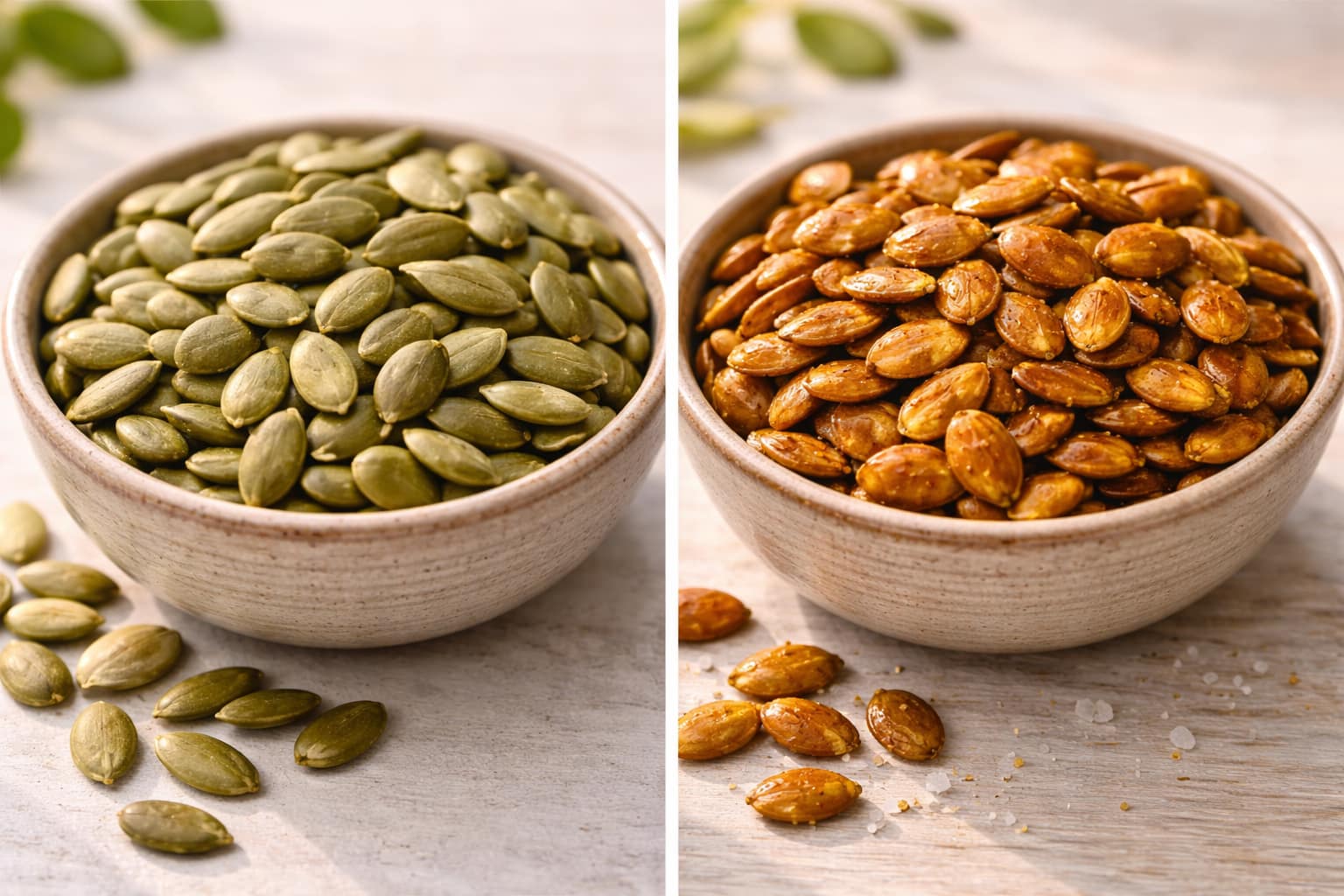
    • Raw pumpkin seeds
    • Roasted seeds
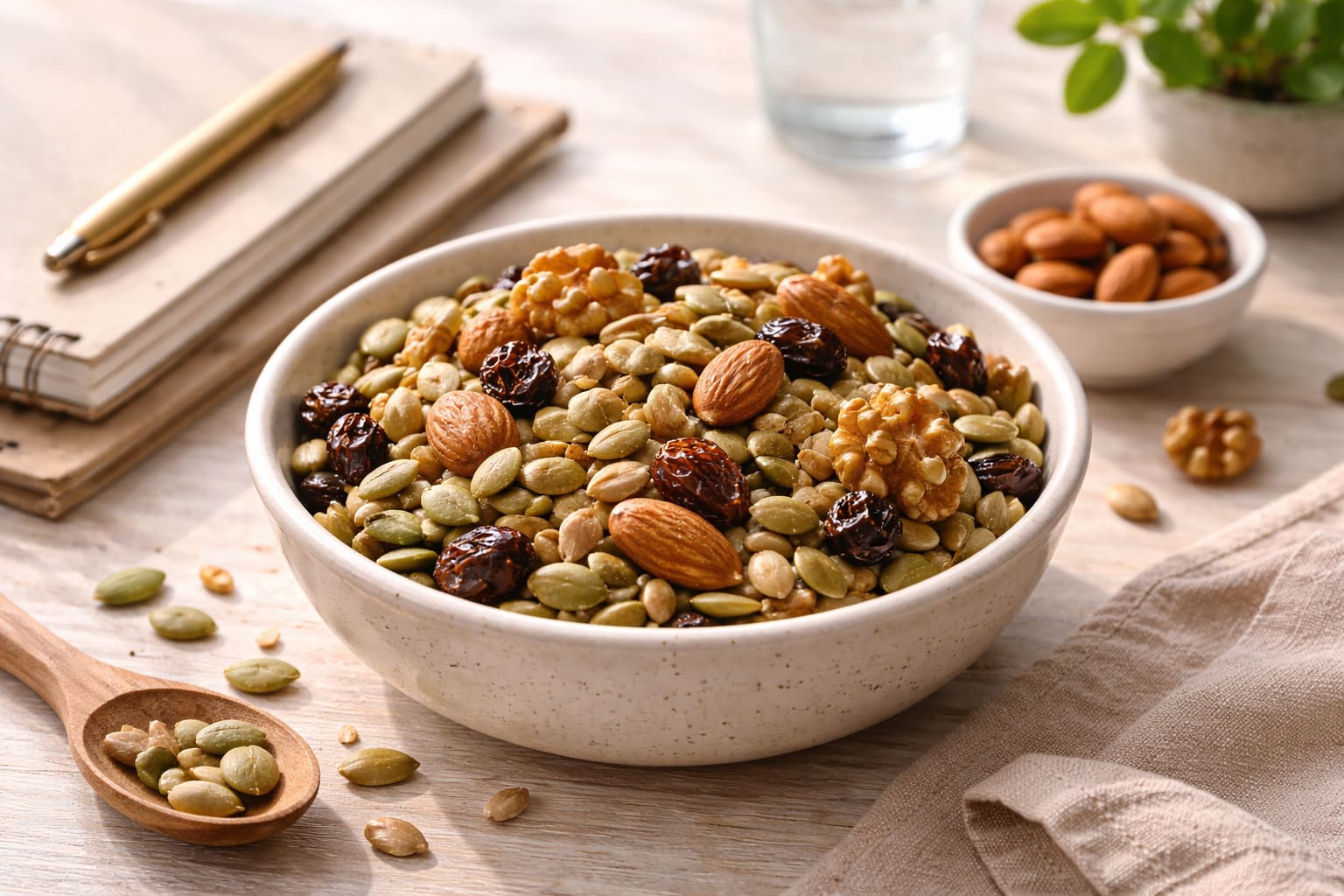
    • Mixed with almonds, raisins, walnuts
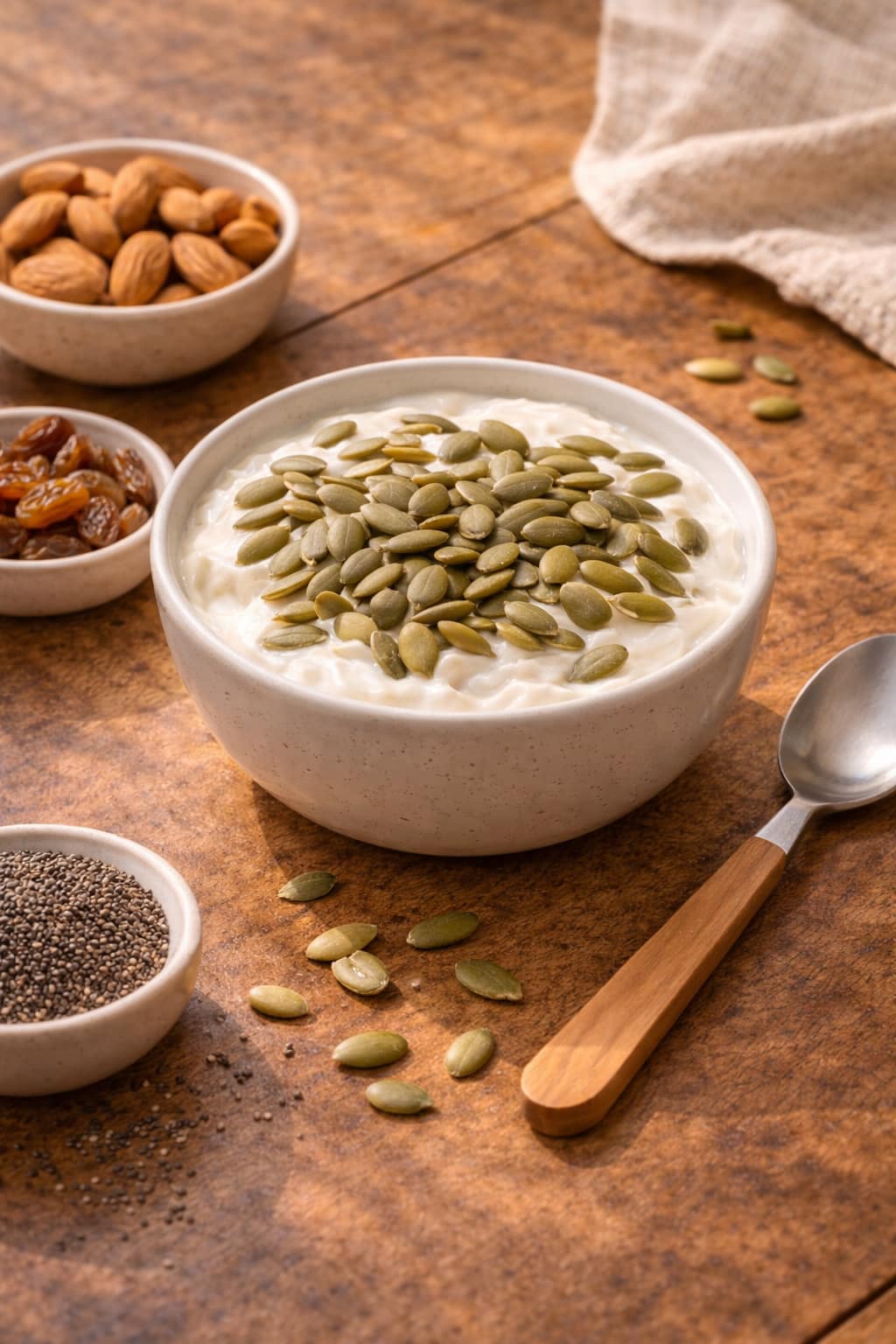
    • Added to curd, smoothies, oats
    • Sprinkled on salads or rice bowls

    General Quantity

    Most people eat 1–2 tablespoons per day.
    Choose the amount that suits your digestion.

    Side Effects or Things to Keep in Mind

    General lifestyle precautions:

    • Eating too many seeds at once may cause heaviness.
    • Seeds are slightly oily, so avoid overuse at night.
    • Drink enough water when eating seeds.
    • Avoid salted or heavily spiced pumpkin seeds daily.
    • If dry seeds feel hard to digest, try soaked or roasted ones.

    These points are general observations, not medical warnings.

    Real-Life Examples & Traditional Uses

    Real-Life Examples & Traditional Uses

    In Indian Homes:

    • Pumpkin seeds are added to morning smoothies for energy.
    • Many people eat a nuts-and-seeds trail mix in the evening.
    • They are used in granola, homemade laddoos, and breakfast bowls.
    • Roasted pumpkin seeds are becoming a popular office snack.

    Seasonal Use:

    • Winter: Roasted pumpkin seeds give warmth and energy.
    • Summer: Soaked seeds feel lighter and more hydrating.

    Cultural Use:

    While pumpkin seeds are not traditional in all Indian regions, they fit naturally into modern lifestyle diets focusing on skin and hair nourishment.

    Conclusion

    Pumpkin seeds are a simple, powerful addition to your daily routine. Their natural oils, fibre, and nutrients make them ideal for skin glow, hair strength, and overall wellness. Add a spoonful to your breakfast or snacks and enjoy healthy, everyday nourishment.

    Frequently Asked Questions

    Q1. Can we eat pumpkin seeds at night?

    Yes, you can eat pumpkin seeds at night in small amounts. They may help calm hunger and provide gentle energy. However, eating large quantities can feel heavy, so it’s best to limit intake to about 1 tablespoon or less.

    Q2. Can I eat pumpkin seeds daily?

    Yes, pumpkin seeds can be eaten daily as part of a balanced routine. Most people enjoy 1–2 tablespoons in the morning or as a snack. They go well with fruits, curd, oats, or smoothies.

    Q3. Are pumpkin seeds good for skin naturally?

    Yes, pumpkin seeds are traditionally believed to support skin glow, reduce dryness, and improve overall skin texture due to their natural oils and fibre. They fit well into a skin-friendly diet.

    Q4. Do pumpkin seeds help with hair health?

    Pumpkin seeds are commonly consumed for hair nourishment and strength. They contain plant-based nutrients that may support healthy hair when eaten regularly.

    Q5. Should pumpkin seeds be soaked or roasted?

    Both options are fine. Soaked pumpkin seeds feel lighter and easier to digest, while roasted pumpkin seeds taste better and are great for snacking. Choose whichever suits your taste and digestion.

  • Is Papaya Good for Digestion?

    Is Papaya Good for Digestion?

    What Does “Papaya for Digestion” Mean

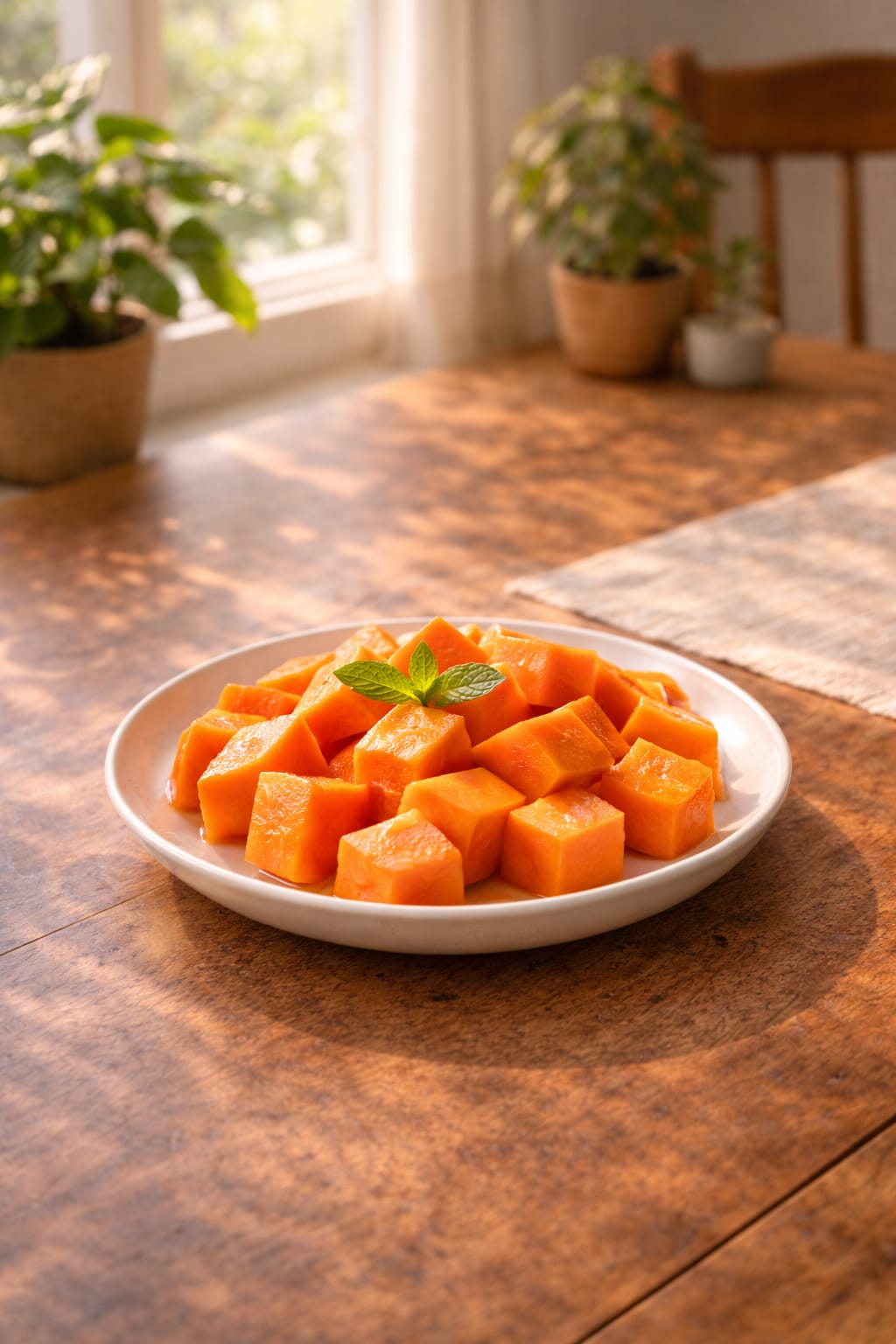
    Papaya is one of the easiest fruits to digest and is widely eaten across India. Many people have it in the morning or after meals because it feels light, refreshing, and soothing to the stomach. This article explains in simple language whether papaya is good for digestion, how to eat it, when to eat it, and what to keep in mind.

    What Does “Papaya for Digestion” Mean?

    Papaya for digestion refers to eating papaya as a fruit that may help your stomach feel light and comfortable. It is known for its soft texture, mild sweetness, and natural fibre, which are part of everyday digestive wellness.

    People commonly eat papaya:

    • In the morning
    • After lunch
    • As an evening snack

    It is also one of the most recommended fruits for kids and elders.

    Benefits of Papaya for Digestion in Daily Life

    Benefits of Papaya for Digestion in Daily Life

    Here are the most common lifestyle-related benefits people notice when they include papaya in their routine:

    1. Easy to Digest

    Papaya has a soft, melt-in-mouth texture that makes it gentle on the stomach.

    2. Natural Fibre Support

    The fibre in papaya helps your system move smoothly and reduces the feeling of heaviness.

    3. Helps with Morning Freshness

    Many people feel lighter when they eat papaya on an empty stomach or before breakfast.

    4. Supports Clean Digestion

    Papaya is traditionally believed to help clear the digestive tract and remove mild discomfort.

    5. Hydration & Cooling Effect

    Since papaya contains water, it gives a cooling and calming experience, especially in summer.

    6. Good for Kids and Elders

    Its softness makes it an ideal fruit for people with sensitive digestion.

    7. Reduces Cravings

    Papaya is sweet enough to satisfy hunger but not heavy like desserts.

    How and When to Eat Papaya for Digestion

    How and When to Eat Papaya for Digestion?

    Best Timing

    • Morning on empty stomach – many people prefer this for clean digestion
    • After breakfast – for a light energy boost
    • After lunch – helps reduce heaviness
    • Evening – a refreshing snack before dinner

    How to Eat Papaya

    • As plain sliced fruit
    • Mixed into fruit salads
    • With a squeeze of lemon
    • Blended into smoothies
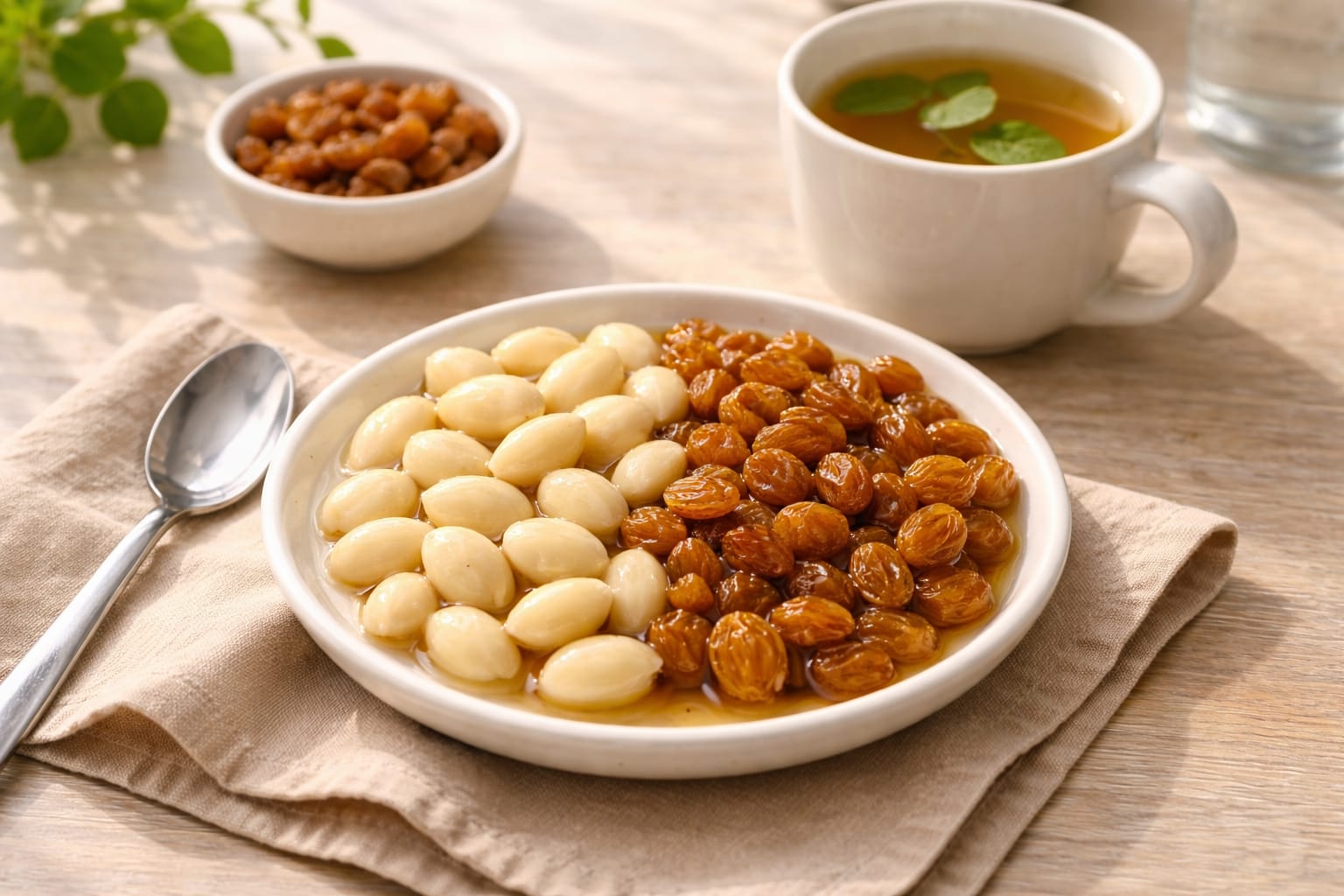
    • Combined with soaked raisins or almonds

    General Quantity

    A small to medium bowl (½–1 cup) is common in Indian households.

    Choose the amount that feels comfortable for you.

    Side Effects or Things to Keep in Mind

    Side Effects or Things to Keep in Mind

    These are general lifestyle tips:

    • Some people may feel bloated if they eat too much at once.
    • Avoid papaya immediately after a very heavy or oily meal.
    • Overripe papaya may feel too sweet for some individuals.
    • Have fresh papaya; avoid cutting and storing for long hours.
    • Pregnant women should consult a doctor regarding papaya intake.

    These points are based on everyday habits, not medical warnings.

    Real-Life Examples & Traditional Uses

    In Indian Homes:

    • Papaya is often served after lunch to support easy digestion.
    • Many people eat papaya first thing in the morning for a clean digestive start.
    • It is included in tiffins, salads, and quick breakfast bowls.
    • Papaya with a dash of lemon is a common summer snack.

    Seasonal Use:

    • Summer: Best time to eat papaya because it feels cooling and hydrating.
    • Winter: Eaten in moderation, usually after meals.
    • Monsoon: Many prefer smaller portions to avoid heaviness.

    Cultural Use:

    In Ayurveda and traditional Indian households, papaya is known as a fruit that supports digestion due to its fibre and easy-to-eat texture.

    Conclusion

    Papaya is a simple and effective fruit for daily digestion support. It is soft, light, hydrating, and perfect for morning or post-meal consumption. Whether you eat it alone or in salads, papaya can easily become a daily habit for better digestion and overall wellness.

    Frequently Asked Questions

    Q1. Can we eat papaya at night?

    Yes, you can eat papaya at night if it suits your digestion. Some people may feel bloated when eating fruits late at night, while others find papaya comfortable. A small bowl eaten 1–2 hours before bedtime works well for many people.

    Q2. Can I eat papaya daily?

    Yes, papaya is commonly eaten daily in many Indian households. You can have a small bowl in the morning or after lunch. It is gentle, easy to digest, and suitable for most body types.

    Q3. Is papaya good for digestion naturally?

    Yes, papaya is generally considered good for digestion due to its fibre content, high water content, and soft texture. Many people eat it to reduce heaviness, support smooth digestion, and feel lighter.

    Q4. Can papaya be eaten on an empty stomach?

    Yes, papaya is often eaten on an empty stomach as a morning fruit. It may help you feel light, energetic, and refreshed. If it feels too strong for your stomach, you can eat it after breakfast instead.

    Q5. Is papaya safe for children and elders?

    Yes, papaya is soft and easy to chew, making it suitable for both children and elderly people. Serve it in small, comfortable portions.

  • Benefits of Eating Soaked Raisins Daily

    Benefits of Eating Soaked Raisins Daily

    What Are Soaked Raisins

    Raisins (kishmish) are a common ingredient in Indian kitchens, used in desserts, halwa, kheer, and even snacks. But soaked raisins are becoming a popular lifestyle habit because they feel lighter, easier to digest, and more refreshing than dry raisins.
    In this article, we explore the benefits of eating soaked raisins daily, along with timing, everyday examples, side effects, and simple usage tips.

    What Are Soaked Raisins?

    Soaked raisins are simply raisins that have been kept in water overnight. When they absorb water, they become soft, juicy, and easier on the stomach.

    Many people prefer soaked raisins in the morning because they feel lighter and more hydrating than dry raisins.

    Benefits of Eating Soaked Raisins Daily

    Benefits of Eating Soaked Raisins Daily

    Below are the most common lifestyle-related benefits people experience:

    1. Gentle on Digestion

    Soaked raisins may help reduce dryness and feel easier to digest compared to dry raisins.

    2. Natural Morning Energy

    Raisins contain natural sugars that give quick but balanced energy in the morning.

    3. Support Hydration

    Because raisins absorb water, they add a hydrating effect when eaten soaked.

    4. Good for Skin Hydration

    Many people notice subtle skin freshness because soaked raisins support hydration and natural oils.

    5. Light Sweet Craving Control

    If you crave sweets, 4–7 soaked raisins in the morning reduce sugar cravings.

    6. Healthy Option for Kids

    Soft soaked raisins are easier for children to chew and enjoy.

    7. Great for Busy Mornings

    You can soak them at night and grab them quickly before office or school.

    8. Pairs Well with Other Morning Foods

    You can eat soaked raisins with almonds, curd, oats, or smoothies.

    How and When to Eat Soaked Raisins

    How and When to Eat Soaked Raisins?

    Best Time to Eat

    • First thing in the morning
    • After warm water
    • With breakfast
    • As a mid-morning snack

    How to Eat Soaked Raisins

    • Eat them directly after draining the water
    • Mix them into oats or porridge
    • Add to curd or fruit bowls
    • Blend into a smoothie

    General Quantity

    Most people eat 4–10 soaked raisins daily.

    Adjust based on taste and comfort.

    Side Effects or Things to Keep in Mind

    These are simple lifestyle considerations:

    • Eating too many raisins at once may feel heavy or too sweet.
    • Raisins are naturally sweet—avoid mixing with too much honey or sugar.
    • Some people may prefer green raisins because they feel lighter.
    • If you feel bloated, reduce the quantity.
    • In summer, soaked raisins feel better than dry ones.

    These points are for general awareness, not medical guidance.
    Real-Life Examples & Traditional Uses

    Real-Life Examples & Traditional Uses

    In Indian Homes:

    • Many parents give children soaked raisins for natural morning energy.
    • Raisins are added to kheer, halwa, pulao, and festive sweets.
    • Pregnant women in households are often offered soaked raisins for hydration.
    • Soaked raisins are used in winter with warm water and in summer for cooling.

    Seasonal Usage:

    • Summer: Soaked raisins feel cooling and refreshing.
    • Winter: Dry or lightly soaked raisins feel warming.
    • Monsoon: Best eaten in moderation.

    Cultural Use:

    Raisins are widely used in Indian festivals, puja prasad, and traditional sweets because they symbolize sweetness and prosperity.

    Conclusion

    Soaked raisins are a simple, natural, and refreshing addition to your morning routine. They offer gentle energy, better hydration, and improved digestion comfort. Add a handful of soaked raisins daily, pair them with almonds or fruits, and enjoy a light and healthy start to your day.

    Frequently Asked Questions

    Q1. Can we eat soaked raisins at night?

    You can eat soaked raisins at night, but many people prefer having them in the morning because they feel light and energizing. At night, they may taste a little too sweet for some people. If you do eat them at night, keep the quantity small (about 3–4 pieces).

    Q2. Can I eat soaked raisins daily?

    Yes, soaked raisins can be eaten daily as part of a balanced lifestyle. Most people consume around 4–10 soaked raisins every morning. They are simple, natural, and do not require cooking.

    Q3. Are soaked raisins good for skin naturally?

    Yes, soaked raisins are traditionally believed to support natural skin hydration and glow because of their natural sweetness and moisture. Many people include them in their morning routine for refreshed skin and balanced energy.

    Q4. Can soaked raisins help with digestion?

    Soaked raisins may help digestion feel smoother since they contain moisture and are softer than dry raisins. If dry fruits feel heavy on your stomach, soaked raisins may be a better option.

    Q5. How long should raisins be soaked?

    Raisins are usually soaked for 6–8 hours or overnight. Soaking makes them soft, juicy, and easier on the stomach. During winter, some people prefer soaking them in warm water.

  • 10 Simple Lifestyle Habits for Better Energy, Sleep and Wellness

    10 Simple Lifestyle Habits for Better Energy, Sleep and Wellness

    What Are Simple Lifestyle Habits for Energy and Wellness

    A balanced lifestyle doesn’t require major changes. Small, simple habits can make your day feel lighter, more energetic, and more peaceful. From morning routines to bedtime practices, these small steps support better sleep, digestion, hydration, and overall wellness.
    In this guide, we explore 10 simple lifestyle habits for energy and wellness using everyday actions that fit naturally into Indian daily life.

    What Are Simple Lifestyle Habits for Energy and Wellness?

    Simple lifestyle habits are small actions you repeat daily—like drinking warm water in the morning, eating seasonal foods, walking, or reducing screen time before sleep.

    These habits are easy to follow, improve your routine, and help you feel fresh, active, and relaxed without needing big changes or complex routines.

    Benefits of Simple Lifestyle Habits in Daily Life

    1. More Energy

    Small changes like stretching, sunlight exposure, or morning hydration may help you feel more active.

    2. Better Sleep

    Night routines like reading, warm milk, or early dinner support calmness.

    3. Improved Digestion

    Mindful eating, chewing properly, and light dinners often reduce heaviness.

    4. Better Hydration

    Drinking water throughout the day keeps your body refreshed.

    5. Balanced Mood

    Walking, sunlight, and simple self-care help you stay positive.

    10 Simple Lifestyle Habits for Better Energy, Sleep & Wellness

    10 Simple Lifestyle Habits for Better Energy, Sleep & Wellness

    Below are ten habits that are easy to add to your daily routine.

    1. Start Your Day with Warm Water

    Warm water is commonly used in many homes as the first drink of the day.
    It may support hydration and gentle digestion.

    2. Get 10 Minutes of Morning Sunlight

    Sun exposure in the morning is believed to improve mood and energy.
    It helps set a fresh tone for the day.

    3. Add Seasonal Fruits to Breakfast

    Seasonal fruits like banana, papaya, apple, or orange provide light morning freshness and steady energy.

    4. Take Short Walks After Meals

    A 10–15-minute walk after lunch or dinner may help reduce heaviness and improve daily movement.

    5. Drink Enough Water

    Keeping a water bottle with you helps you stay hydrated throughout the day.
    Hydration supports skin glow, digestion, and energy.

    6. Reduce Phone Use 1 Hour Before Sleep

    Less screen time before bed helps your mind relax and improves sleep quality.
    Reading or light music works as a calming routine.

    7. Keep Dinner Light and Early

    Roti with sabzi, khichdi, or soup makes digestion easier at night.

    8. Include a Small Stretching Routine

    Morning or evening stretching keeps your body flexible and reduces stiffness.
    Even 5–7 minutes is helpful.

    9. Use Herbal Drinks in the Evening

    Drinks like warm water, ginger tea, or herbal infusions create a calming evening habit without caffeine.

    10. Practice Gratitude or Journaling

    Writing 1–2 lines about your day helps clear the mind and improve emotional wellness.

    How and When to Use These Habits

    How and When to Use These Habits? 

    Morning

    • Warm water
    • Sunlight
    • Stretching
    • Seasonal fruits

    These habits boost energy and mood.

    Afternoon

    • Hydration
    • Short walk after lunch
    • Light tasks or breaks

    Helps you avoid mid-day fatigue.

    Evening

    • Herbal tea
    • Light stretching
    • Early dinner

    Perfect to slow down your routine.

    Night

    • No screens for 1 hour
    • Journaling
    • Warm milk (optional)

    Helps prepare your mind for restful sleep.

    Side Effects or Things to Keep in Mind

    Side Effects or Things to Keep in Mind

    • Too much caffeine during the day may disturb sleep.
    • Avoid walking too fast after meals—gentle walking works better.
    • Drinking too much water at once may feel uncomfortable; sip slowly.
    • Avoid very heavy meals late at night.
    • Do not force long exercise routines; start with small, easy steps.

    These points are general lifestyle guidance, not medical warnings.

    Real-Life Examples & Traditional Uses

    In Indian Homes:

    • Many families drink warm water or herbal drinks in the morning.
    • Evening chai is a routine, though herbal alternatives are becoming popular.
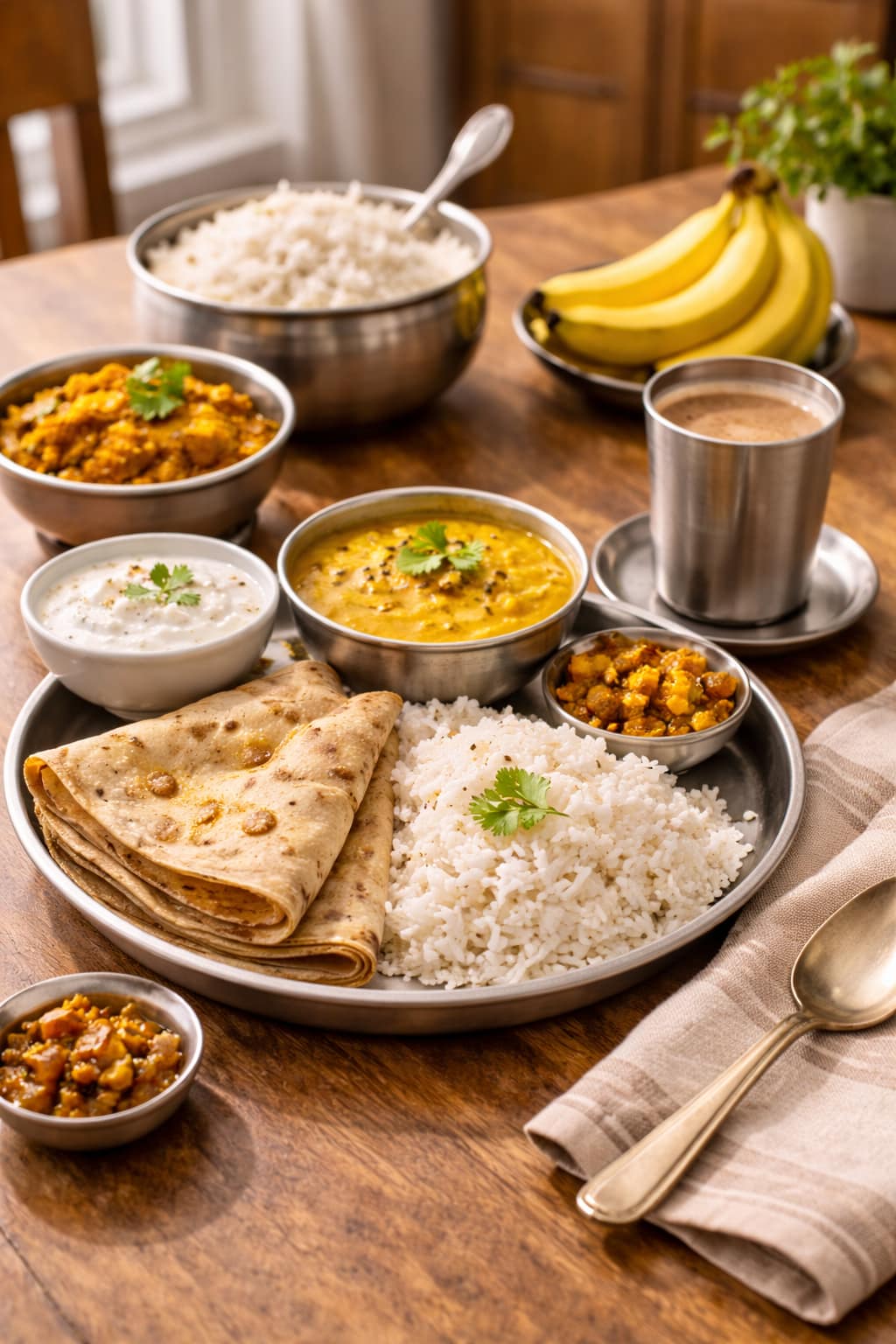
    • Light dinners like khichdi or roti-sabzi are common.
    • Sunlight exposure and morning walks are widely practiced in parks.
    • People keep copper or steel water bottles for regular hydration.

    Traditional Practices:

    • Turmeric milk at night
    • Seasonal fruits according to weather
    • Yoga-inspired stretching for flexibility
    • Gratitude journaling in spiritual homes

    These habits have been followed for years because they make everyday life smoother.

    Conclusion

    Building a healthy lifestyle doesn’t require strict rules. Small habits like drinking warm water, walking, eating seasonal fruits, reducing screen time, and following a calm night routine can greatly support your energy, sleep, and wellness. Start with one or two habits and slowly add more into your daily routine.

    Frequently Asked Questions

    Q1. Can we follow these habits at night?

    Yes, many habits such as light stretching, drinking warm milk, journaling, and avoiding screens are suitable for nighttime. These simple practices may help calm the mind before bed and support better sleep quality.

    Q2. Can I follow these lifestyle habits daily?

    Yes, these habits are generally safe to follow every day. They include basic actions like drinking water, eating fruits, walking, and reducing screen time. You can adjust them according to your comfort and daily routine.

    Q3. Are these habits good for energy and digestion naturally?

    Yes, habits like drinking warm water, getting sunlight, eating light meals, and walking are commonly believed to support natural energy and digestion. These practices are based on simple lifestyle routines followed in many Indian households.

    Q4. What is the best morning routine for energy?

    A simple morning routine includes drinking warm water, getting sunlight, doing light stretching, and having a fruit-based breakfast. These steps may help you feel active and refreshed without complex routines or heavy meals.

    Q5. Do I need special foods or supplements for wellness?

    Not necessarily. Everyday foods such as fruits, nuts, milk, herbal drinks, and home-cooked meals are sufficient for most people. Focus on regular meal timing, lighter food, and proper hydration.

  • Best Foods to Eat in Summer, Winter and Monsoon

    Best Foods to Eat in Summer, Winter and Monsoon

    What Are Seasonal Foods and Why Do They Matter

    Every season in India brings a different climate and different needs for your body. Summer brings heat, winter brings dryness and cold, and monsoon brings humidity. The foods you choose in each season can support better hydration, energy, digestion, and overall comfort.
    This guide explains the best foods for summer, winter and monsoon, using simple lifestyle habits, traditional examples, and everyday Indian ingredients.

    What Are Seasonal Foods and Why Do They Matter?

    Seasonal foods are ingredients that naturally suit a particular time of the year. They match the climate, provide comfort, and help you feel balanced throughout the day.

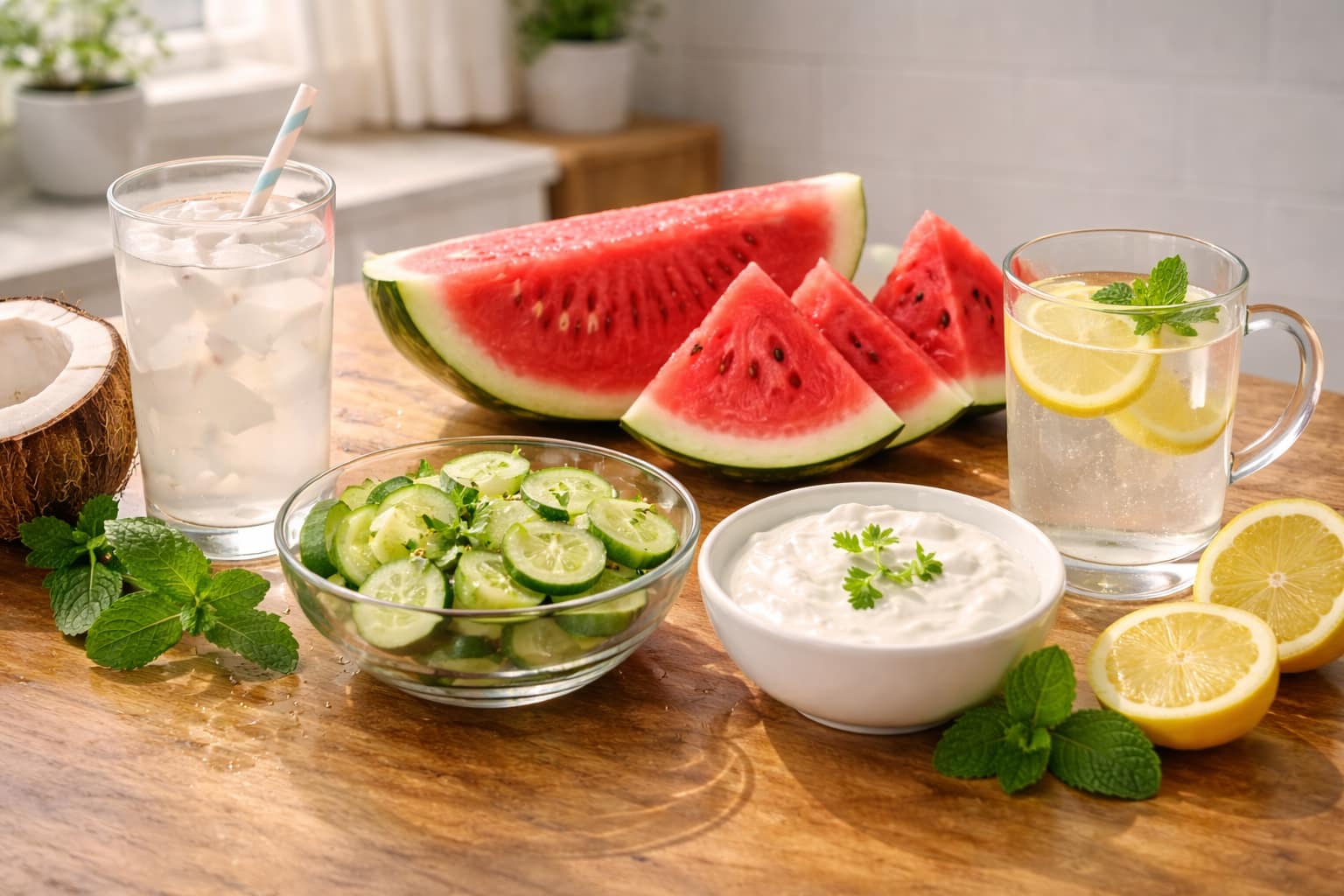
    • In summer, we choose cooling and hydrating foods.
    • In winter, we prefer warm and energy-rich foods.
    • In monsoon, we eat light, easy-to-digest foods.

    Seasonal eating is a traditional practice in India and helps you stay aligned with changing weather.

    Benefits of Choosing Foods Based on Seasons

    1. Better Hydration

    Summer foods like coconut water, watermelon, and curd help you stay refreshed.

    2. Improved Digestion

    Monsoon-friendly foods like soups, khichdi, and ginger tea feel lighter.

    3. Steady Energy Levels

    Winter foods like ghee, nuts, and root vegetables give warmth and stamina.

    4. Balanced Lifestyle

    Eating with the season helps prevent heaviness, dryness, or dehydration.

    5. Natural Freshness

    Seasonal foods taste better and feel more comfortable for everyday use.

    Best Foods for Summer, Winter, and Monsoon (Season-Wise Guide)

    Best Foods for Summer, Winter, and Monsoon (Season-Wise Guide)

    Below is a simple, clear seasonal list of foods used commonly in Indian homes.

    Best Foods for Summer (Cooling & Hydrating)

    1. Watermelon

    Refreshing and full of water content. Great for afternoons.

    2. Coconut Water

    Naturally hydrating; perfect for hot days.

    3. Curd / Buttermilk

    Keeps the body cool and light. Ideal with lunch.

    4. Cucumber

    Crunchy and hydrating; good in salads.

    5. Lemon Water

    Popular morning drink for freshness.

    6. Mint

    Traditionally used for cooling; added to chutneys or drinks.

    7. Tender Mango (Kacchi Kairi)

    Used for summer drinks and pickles.

    Best Foods for Winter (Warm & Energy-Rich)

    Best Foods for Winter (Warm & Energy-Rich)

    1. Ghee

    Used in chapati, rice, or dal for warmth.

    2. Jaggery

    Traditional winter sweetener for warmth and comfort.

    3. Nuts (Almonds, Peanuts, Walnuts)

    Good for morning energy.

    4. Sesame Seeds (Til)

    Used in winter sweets like til ladoo.

    5. Carrot (for Gajar Halwa)

    Seasonal winter vegetable with rich taste.

    6. Bajra Roti

    A warming grain used in Rajasthan and Gujarat.

    7. Sweet Potato

    Comforting winter snack.

    Best Foods for Monsoon (Light & Digestion-Friendly)

    Best Foods for Monsoon (Light & Digestion-Friendly)

    1. Ginger Tea

    Traditionally used to balance humidity.

    2. Khichdi

    Simple and light for digestion.

    3. Soups

    Warm and gentle during monsoon evenings.

    4. Turmeric

    Commonly added to milk or curries.

    5. Steamed Snacks (Idli, Dhokla)

    Soft, light, and easier to digest.

    6. Seasonal Vegetables (Bottle Gourd, Ridge Gourd)

    Commonly used in Indian kitchens during monsoon.

    7. Herbal Drinks (Tulsi Water, Jeera Water)

    Used traditionally to balance humidity.

    How and When to Use Seasonal Foods?

    Morning

    • Summer: Lemon water, watermelon, fruit
    • Winter: Warm milk, nuts, jaggery
    • Monsoon: Ginger tea, light breakfast like idli

    Afternoon

    • Summer: Curd rice, salads
    • Winter: Bajra roti, ghee-topped dal
    • Monsoon: Khichdi, soup

    Evening

    • Summer: Cucumber, coconut water
    • Winter: Roasted peanuts, sweet potato
    • Monsoon: Ginger tea or herbal drink

    Night

    • Summer: Light chapati and sabzi
    • Winter: Ghee in roti, warm milk
    • Monsoon: Light meals, warm cooked foods

    General Quantity

    Small, comfortable portions work best in any season.

    Side Effects or Things to Keep in Mind

    • Avoid very cold drinks in winter mornings.
    • Too many watery fruits in monsoon may feel heavy for some.
    • Coconut water at night may feel too cooling.
    • Excess jaggery or nuts in winter may feel heavy.
    • Deep-fried foods during monsoon may cause sluggishness.
    • Too much raw salad in monsoon may feel uncomfortable for some people.

    These are general lifestyle suggestions, not medical instructions.

    Real-Life Examples & Traditional Uses

    In Indian Homes:

    Summer

    • Curd rice in South India
    • Aam panna in North India
    • Fresh fruit bowls in the afternoon

    Winter

    • Gajar ka halwa
    • Bajra roti with ghee
    • Til gud ladoos in festivals

    Monsoon

    • Ginger tea with pakoras (moderation recommended)
    • Khichdi for light dinners
    • Warm soups in the evening

    Seasonal Eating by Tradition

    Indian families follow seasonal eating naturally:

    • Water-rich fruits in summer
    • Warming spices in winter
    • Light, cooked meals in monsoon

    This comes from years of traditional wisdom.

    Conclusion:

    Eating according to the season helps maintain energy, digestion, hydration, and overall comfort. Choose cooling foods in summer, warming foods in winter, and light foods in monsoon. Following seasonal habits makes everyday eating simple and balanced.

    Frequently Asked Questions

    Q1. Can we eat watermelon at night?

    Many people avoid eating watermelon at night because it is very watery and may disturb sleep due to frequent urination. It is generally better to eat watermelon during the day, especially in the afternoon.

    Q2. Can I drink coconut water daily?

    Yes, coconut water is commonly consumed daily, especially in summer. It helps keep the body hydrated. Most people prefer drinking it in the morning or afternoon rather than at night.

    Q3. Are winter foods like ghee and jaggery good for energy?

    Yes, ghee and jaggery are traditionally consumed in winter as they provide warmth and steady energy. They are best eaten in small amounts, preferably in the morning or afternoon.

    Q4. Is it okay to eat raw salads in monsoon?

    Some people avoid raw salads during the monsoon season because they may feel heavy or uncomfortable in humid weather. Lightly cooked or steamed vegetables are often preferred.

    Q5. Which foods help with skin glow in summer and winter?

    Summer: Watermelon, coconut water, and cucumber
    Winter: Nuts, ghee, and carrots
    These foods are traditionally used to support natural skin nourishment.

  • Side Effects of Common Foods We Eat Every Day

    Side Effects of Common Foods We Eat Every Day

    What Are the Side Effects of Common Foods

    We eat many foods daily without thinking about how they affect our lifestyle, digestion, or energy. While most everyday foods are safe, having too much of something or eating it at the wrong time may cause simple lifestyle discomforts.
    This article explains the side effects of common foods in a simple, non-medical way so you can build better eating habits.

    What Are the Side Effects of Common Foods?

    Side effects of common foods are small, everyday reactions some people may feel when they eat certain items in excess or at the wrong time. These include heaviness, acidity, bloating, dryness, or feeling low on energy.

    These do not refer to medical issues—only general lifestyle observations based on common habits and traditional practices.

    Benefits of Understanding Side Effects in Daily Life

    Knowing how certain foods behave in your body may help you adjust your routine. Here’s how this information helps:

    1. Better Digestion

    You can avoid foods that feel heavy or slow down your day.

    2. Balanced Energy

    Foods eaten at the wrong time may make you feel dull or sleepy.

    3. Better Skin & Hydration

    Some snacks and drinks may cause dryness or imbalance if overused.

    4. Improved Eating Timing

    Helps you choose what to eat in the morning, afternoon, or night.

    5. Simple Lifestyle Awareness

    You understand traditional wisdom like “curd at night feels heavy” or “too much tea makes you dehydrated.”

    Common Everyday Foods and Their Possible Side Effects

    Common Everyday Foods and Their Possible Side Effects

    These side effects are based on general lifestyle experiences, not medical conditions.

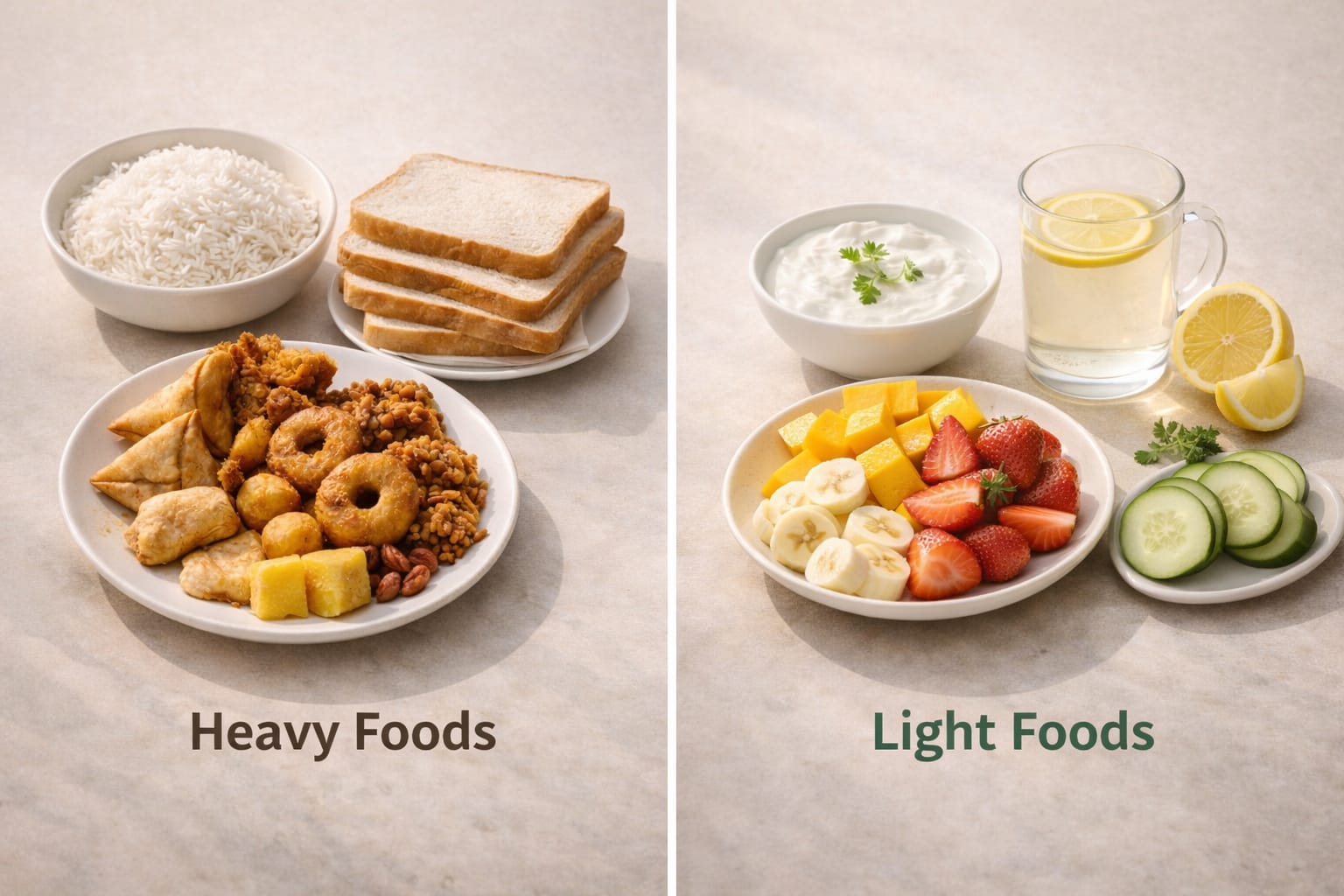
    1. Rice

    • May feel heavy at night for some people
    • Can make you feel sleepy after lunch

    2. Bread (Maida)

    • Often causes bloating if eaten too much
    • May feel heavy when eaten late at night

    3. Tea

    • Too many cups may cause dryness or acidity
    • Can disturb sleep if taken late evening

    4. Coffee

    • May create restlessness if consumed in excess
    • Can reduce appetite temporarily

    5. Banana

    • Some people feel bloated at night
    • Better eaten in the morning or afternoon

    6. Curd

    • Traditionally avoided at night as it may feel cooling and heavy
    • Can cause mild throat discomfort for some people

    7. Potatoes

    • Too much may cause heaviness
    • Fried versions may reduce energy later

    8. Fried Snacks

    • May cause sluggishness
    • Often leads to dryness or thirst

    9. Sweets

    • Quick energy but sudden drop later
    • May increase craving for more sweets

    10. Lemon Water

    • Too sour for an empty stomach for some
    • Can irritate the throat if taken very cold

    11. Peanuts

    • May feel too heavy if eaten late at night
    • Excess can cause dryness

    12. Milk

    • Can feel heavy if taken immediately after meals
    • Some people feel sleepy after drinking it

    13. Turmeric Milk

    • Too much turmeric may feel strong
    • Best taken at night, not morning

    14. Green Tea

    • May cause restlessness if taken on an empty stomach
    • Not ideal before sleep

    15. Mango

    • Traditionally believed to cause heat when eaten in excess
    • Best consumed during daytime

    How and When to Use These Foods (Timing Tips)

    How and When to Use These Foods? (Timing Tips)

    Morning

    • Lemon water
    • Banana
    • Poha/upma
    • Green tea
    • Wheat bread (limited)

    Afternoon

    • Rice with dal
    • Curd
    • Fruits
    • Light vegetables

    Evening

    • Tea or coffee (before 6 PM)
    • Light snacks
    • Fruits like apple or pear

    Night

    • Milk
    • Roti with sabzi
    • Light khichdi

    General Quantity

    Small, comfortable portions work best for most people.

    Side Effects or Things to Keep in Mind

    Side Effects or Things to Keep in Mind

    These are simple lifestyle suggestions:

    • Avoid fried foods late at night—they may cause heaviness.
    • Too much tea or coffee may lead to dryness or disturbed sleep.
    • Fruits like banana or mango may feel heavy at night for some people.
    • Curd is commonly avoided at night due to its cooling nature.
    • Drinking too many sweet drinks may cause energy drops.
    • Eating very sour foods on an empty stomach may cause mild acidity.

    Always listen to your body and eat based on your comfort.

    Real-Life Examples & Traditional Uses

    In Indian Homes:

    • Curd rice is taken at lunch because it feels light and cooling.
    • Turmeric milk is common at night for warmth.
    • Poha or upma is preferred in the morning for smooth digestion.
    • Lemon water is taken early morning for freshness.
    • Green tea is popular in offices for light detox-like feeling.

    Seasonal Habits:

    • Mangoes in summer mornings
    • Peanuts in winter evenings
    • Buttermilk in hot afternoons
    • Soups in winter nights

    These habits come from tradition and everyday comfort, not medical instructions.

    Conclusion:

    Common foods are safe and part of our daily routine. However, eating them mindfully—at the right time and in the right quantity—can help you feel lighter, energetic, and more comfortable throughout the day. Always adjust your eating habits based on your body’s signals and lifestyle needs.

    Frequently Asked Questions

    Q. Can we eat banana at night?

    A. Some people feel heavy or bloated after eating a banana at night, so it’s usually better in the morning or afternoon. However, if bananas suit your digestion and don’t disturb your sleep, you can eat them at any time.

    Q. Is it okay to drink tea on an empty stomach?

    A. Drinking tea on an empty stomach may cause acidity or dryness for some people. Many prefer having tea after a small snack or breakfast to avoid discomfort.

    Q. Can we eat curd every day?

    A. Yes. Curd is eaten daily in many Indian households, especially during lunch, as it feels cooling and aids digestion. Some people avoid it at night if it feels heavy.

    Q. Are fried snacks bad if eaten daily?

    A. Eating fried snacks every day may make you feel sluggish, dry, or thirsty. It’s better to enjoy them occasionally and balance your diet with fruits, nuts, or home-cooked snacks.

    Q. Is lemon water safe every day?

    A. Yes. Many people drink lemon water daily for hydration and freshness. If it feels too sour on an empty stomach, you can have it after breakfast or dilute it with more water.

  • Is Banana Good Before Bed? (Lifestyle Use Guide)

    Is Banana Good Before Bed? (Lifestyle Use Guide)

    What Does “Banana Before Bed” Really Mean

    Banana is one of the easiest and most comforting fruits available in Indian homes. While many people eat it in the morning, some wonder whether banana is a good option before bed. In this simple lifestyle guide, we explore whether banana is good before bed, along with its timing, benefits, side effects, and real-life examples.

    What Does “Banana Before Bed” Really Mean?

    Eating banana before bed refers to having one banana as a light night snack or as part of your dinner routine. Some people eat it when they feel hungry at night, while others use it to wind down their day.

    It’s an easy, quick food that fits into Indian daily habits.

    Benefits of Eating Banana Before Bed (Lifestyle Perspective)

    Benefits of Eating Banana Before Bed (Lifestyle Perspective)

    Here are some simple, everyday benefits people commonly notice:

    1. Light and Easy Night Snack

    Banana is soft, easy to chew, and doesn’t require cooking—perfect for late-night hunger.

    2. Gentle on Digestion

    Banana is generally easy to digest for many people and may help reduce night-time acidity or heaviness.

    3. Helps Avoid Junk Snacking

    If you usually crave biscuits, chips, or sweets at night, banana can be a healthier alternative.

    4. May Support Better Sleep Routine

    Bananas contain natural carbs that help your body relax. Many people eat it as part of their bedtime routine.

    5. Good for Winter Nights

    Bananas feel filling and can pair well with warm milk for a relaxing combination.

    How and When to Eat Banana Before Bed

    How and When to Eat Banana Before Bed?

    Best Timing

    • 30–60 minutes before going to bed
    • As part of a light dinner
    • As a snack if you feel hungry at night

    Best Ways to Eat It

    • One whole banana
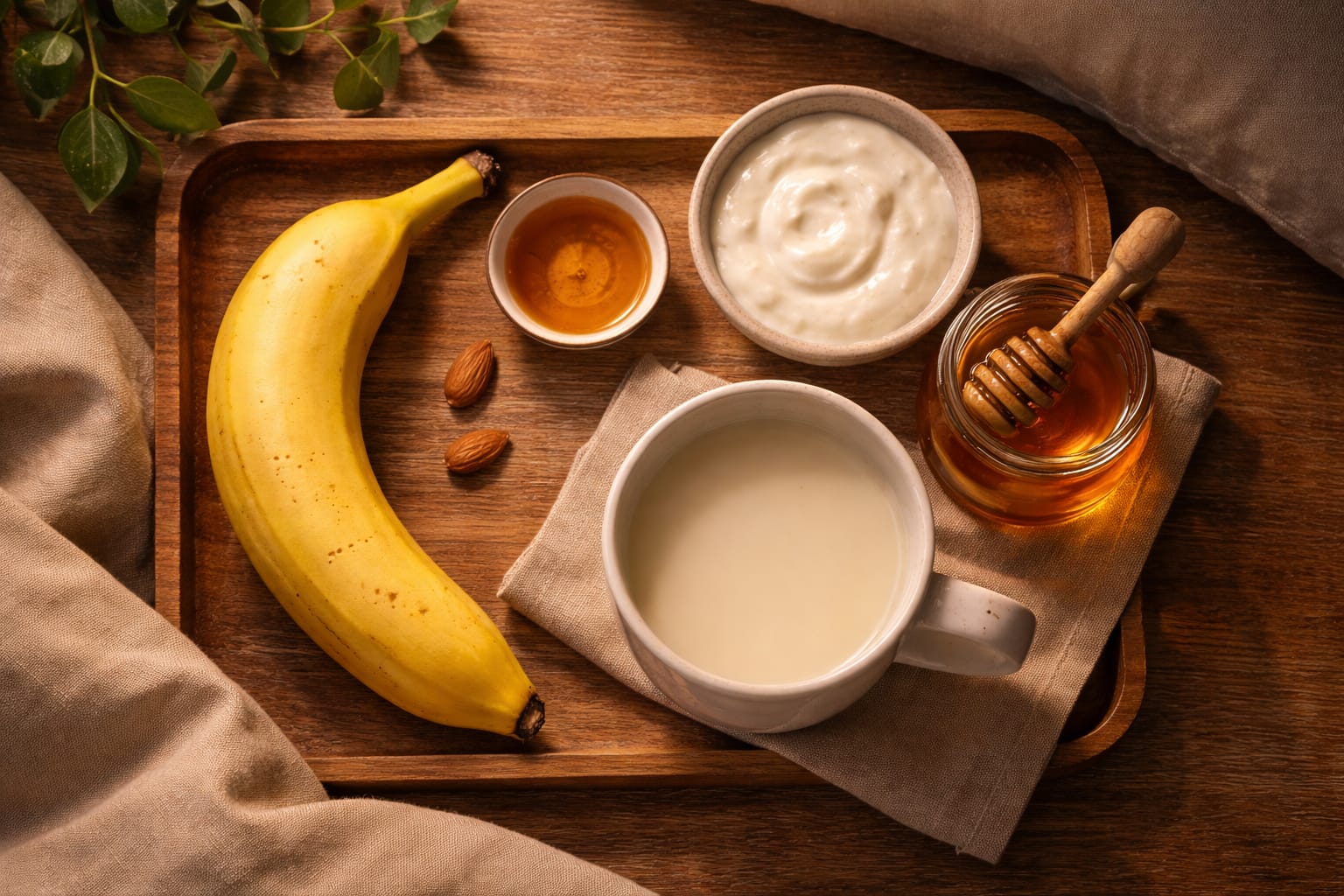
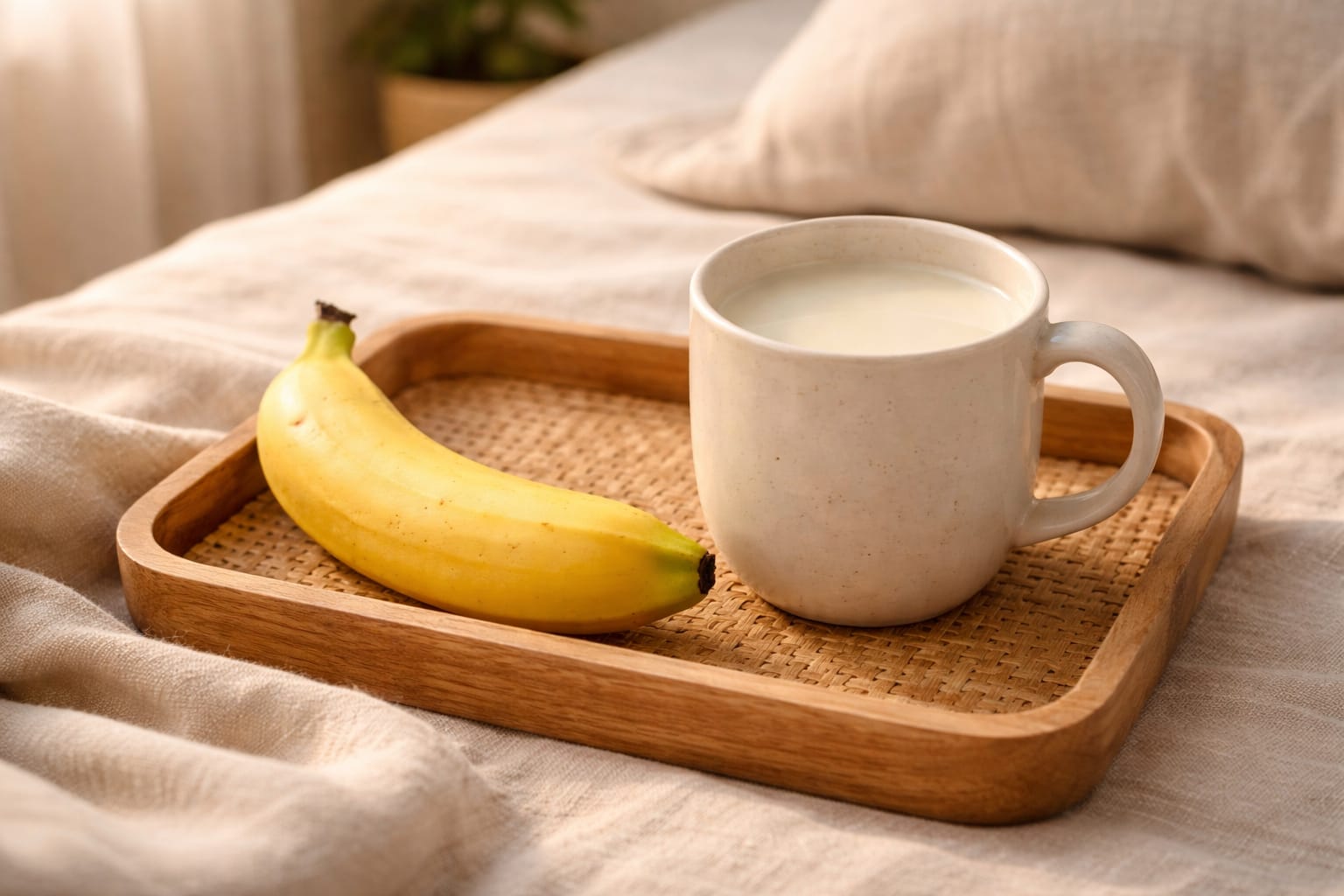
    • Banana with warm milk
    • Banana slices with a spoon of honey (optional)
    • Banana added to a small bowl of curd (if it suits you)

    General Quantity

    Most people eat 1 banana at night.

    Very ripe bananas feel sweeter and more satisfying.

    Side Effects or Things to Keep in Mind

    Side Effects or Things to Keep in Mind

    These are general lifestyle observations:

    • Some people may feel bloated if they eat banana very late at night.
    • If you have a habit of feeling cold at night, banana may feel cooling.
    • Avoid eating multiple bananas together—it may feel heavy.
    • If banana feels too sweet at night, choose a smaller one.
    • People with sensitive digestion may prefer banana earlier in the evening.

    Always observe how your body responds and adjust accordingly.

    Real-Life Examples & Traditional Uses

    In Indian households:

    • Many parents give children a banana before bed to avoid late-night hunger.
    • Banana with warm milk is a common evening or bedtime combo.
    • Farmers and workers in rural areas often eat bananas at night as a quick source of energy after a long day.
    • In South India, banana is eaten anytime—morning or night—based on convenience.

    Seasonal Use:

    • Summer: Banana feels cooling and hydrating.
    • Winter: Best paired with warm milk.
    • Monsoon: Eaten moderately, usually earlier in the evening.

    Banana is flexible and fits into most Indian lifestyles.

    Conclusion

    Banana before bed can be a simple and healthy lifestyle choice if it suits your digestion. It works as a light snack, helps avoid unhealthy cravings, and supports a calmer sleep routine. Start with one banana, observe your comfort, and adjust the timing based on your lifestyle.

    Frequently Asked Questions

    Q1. Can we eat banana at night?

    Yes, you can eat a banana at night. Many people enjoy it as a light and easy bedtime snack. It is soft, filling, and helps avoid heavy junk foods. If you feel bloated or heavy after eating it, try having it earlier in the evening.

    Q2. Is banana good before bed every day?

    Yes, you can eat a banana daily before bed if it suits your body. Most people do not face any issues eating one banana at night. However, avoid eating too many bananas at once, as it may feel heavy.

    Q3. Is banana good for sleep naturally?

    Bananas may help you relax due to their natural carbohydrates. Many people eat them before bedtime for a calming effect. While not a medical solution, they are commonly used as a soothing night snack.

    Q4. Does banana help with digestion at night?

    For many people, bananas feel gentle on the stomach and may help reduce acidity and hunger at night. If banana feels heavy, choose a smaller one or eat it earlier in the evening.

    Q5. Which type of banana is best at night?

    Ripe bananas are usually preferred at night because they are softer and easier to digest. Raw or semi-ripe bananas may feel heavy for some people.

  • Best Lifestyle Healthy Drinks for Morning, Skin, Energy & Digestion

    Best Lifestyle Healthy Drinks for Morning, Skin, Energy & Digestion

    What Are Healthy Drinks for Morning and Skin 

    Many people start their day with tea, coffee, or plain water. But adding a few natural healthy drinks to your morning routine can support daily energy, freshness, skin glow, and better digestion. These drinks are simple, easy to prepare, and made with everyday ingredients from an Indian kitchen.

    This guide explains the best healthy drinks for morning and skin, their lifestyle benefits, timing, real-life examples, and simple usage tips.

    What Are Healthy Drinks for Morning and Skin?

    Healthy drinks for morning and skin are natural beverages made with common ingredients like lemon, honey, coconut water, turmeric, fruits, and herbs. People use them for energy, hydration, digestion comfort, skin glow, and overall freshness.

    These drinks do not replace any medical treatment—they simply support daily wellness habits.

    Best Lifestyle Healthy Drinks for Morning, Skin, Energy & Digestion 

    Best Lifestyle Healthy Drinks for Morning, Skin, Energy & Digestion

    Below are simple drinks that many people in India consume regularly for daily benefits.

    1. Warm Lemon Water

    Freshly squeezed lemon in warm water is widely used for morning freshness.

    2. Honey Water

    Warm water with a spoon of honey feels soothing and gentle on the stomach.

    3. Coconut Water

    Naturally hydrating and light; great for summer mornings.

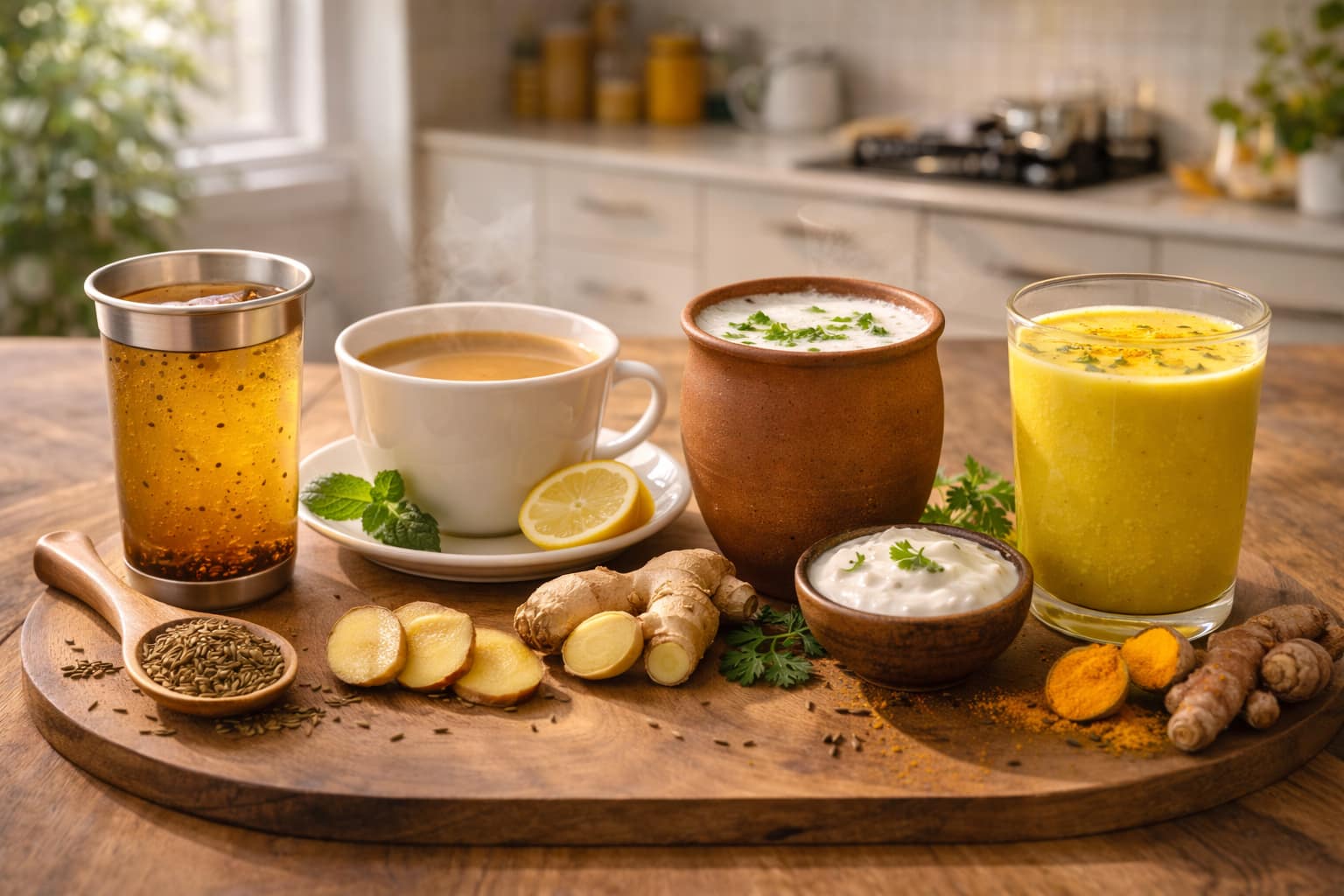
    4. Jeera (Cumin) Water

    Traditionally used for digestion and stomach comfort.

    5. Green Tea

    A light drink for morning calmness and glow.

    6. Turmeric Milk

    A soothing night and morning drink, used for warmth and daily nourishment.

    7. Fresh Fruit Juice

    Orange, mosambi, watermelon, or apple juice for hydration and energy.

    8. Ginger Water or Ginger Tea

    Used in many Indian homes for warmth and digestion.

    9. Buttermilk (Chaas)

    Cooling drink often taken after meals or during hot days.

    10. Amla Water or Amla Juice

    Amla is traditionally used for hair and skin glow.

    Benefits of Healthy Drinks in Daily Life

    Benefits of Healthy Drinks in Daily Life

    These drinks provide small yet meaningful lifestyle benefits:

    1. Morning Energy Boost

    • Lemon water
    • Honey water
    • Fresh juices
    • Ginger tea

    These drinks help you feel refreshed and alert.

    2. Better Digestion (General Belief)

    • Jeera water
    • Ginger water
    • Buttermilk

    They may support a light stomach feeling.

    3. Hydration & Freshness

    • Coconut water
    • Watermelon juice
    • Amla water

    Great for summer mornings.

    4. Skin Glow & Cleansing Feel

    • Green tea
    • Lemon water
    • Amla juice

    These are popular for natural glow and freshness.

    How and When to Use These Drinks?

    Morning

    Most people prefer:

    • Lemon water
    • Honey water
    • Jeera water
    • Green tea
    • Amla water
    • Fresh juice

    Take them on an empty stomach or after light breakfast based on your comfort.

    Afternoon

    • Coconut water
    • Buttermilk
    • Fresh juice
      These help with hydration and cooling.

    Evening

    • Ginger tea
    • Light herbal teas
      Good for relaxation after work.

    Night

    • Turmeric milk (haldi doodh)
      Traditionally taken for warmth and relaxation.

    General Quantity

    1–2 cups per day is common, but you can adjust based on your lifestyle.

    Side Effects or Things to Keep in Mind 

    Side Effects or Things to Keep in Mind

    • Avoid drinking very sour lemon water on an empty stomach if it feels uncomfortable.
    • Too much ginger may feel strong for some people.
    • Fresh juices should be taken without extra sugar.
    • Green tea late at night may disturb sleep.
    • Buttermilk may feel heavy at night for some individuals.
    • Coconut water is best during the day, not right before sleep.

    These are general lifestyle suggestions, not medical guidance.

    Real-Life Examples & Traditional Uses

    In Indian households:

    • Lemon water is often the first drink of the day.
    • Turmeric milk is taken at night in winters.
    • Jeera water is used after heavy meals.
    • Buttermilk is a go-to drink during summer afternoons.
    • Green tea is popular among office workers for light detox-like feeling.
    • Coconut water is taken during outdoor days for quick hydration.

    Seasonal Usage:

    • Summer: Coconut water, watermelon juice, lemon water, chaas
    • Winter: Turmeric milk, ginger tea
    • Rainy season: Ginger tea, jeera water

    Cultural Uses:

    • Turmeric milk in festivals
    • Buttermilk in South Indian meals
    • Ginger tea in morning chai rituals

    Conclusion

    Healthy morning drinks are a simple way to start your day with freshness, energy, and hydration. Whether it’s lemon water, green tea, coconut water, or ginger tea, these drinks fit easily into daily routines. Choose based on your taste, comfort, and lifestyle needs.

    Frequently Asked Questions

    Q. Can we drink lemon water daily?

    A. Yes. Many people drink lemon water daily for freshness and hydration. If it feels too sour on an empty stomach, you can have it after breakfast. Adjust the quantity based on your comfort and taste.

    Q. Can I drink green tea at night?

    A. Green tea contains mild caffeine, which may disturb sleep for some people. It’s usually better to drink it in the morning or afternoon. For nighttime, soothing drinks like turmeric milk are more common.

    Q. Are morning drinks good for glowing skin?

    A. Yes. Drinks such as lemon water, amla juice, and green tea are traditionally believed to support a natural glow by keeping the body hydrated and refreshed. Hydration plays an important role in daily skin appearance.

    Q. Which drink is best for morning energy?

    A. Warm lemon water, honey water, and ginger tea are popular morning drinks that help you feel lighter and more energetic during the day.

    Q. Can I drink coconut water every day?

    A. Yes. Coconut water is generally safe for daily consumption and is commonly enjoyed in India. It’s refreshing and helps with hydration, especially in hot weather or after physical activity.