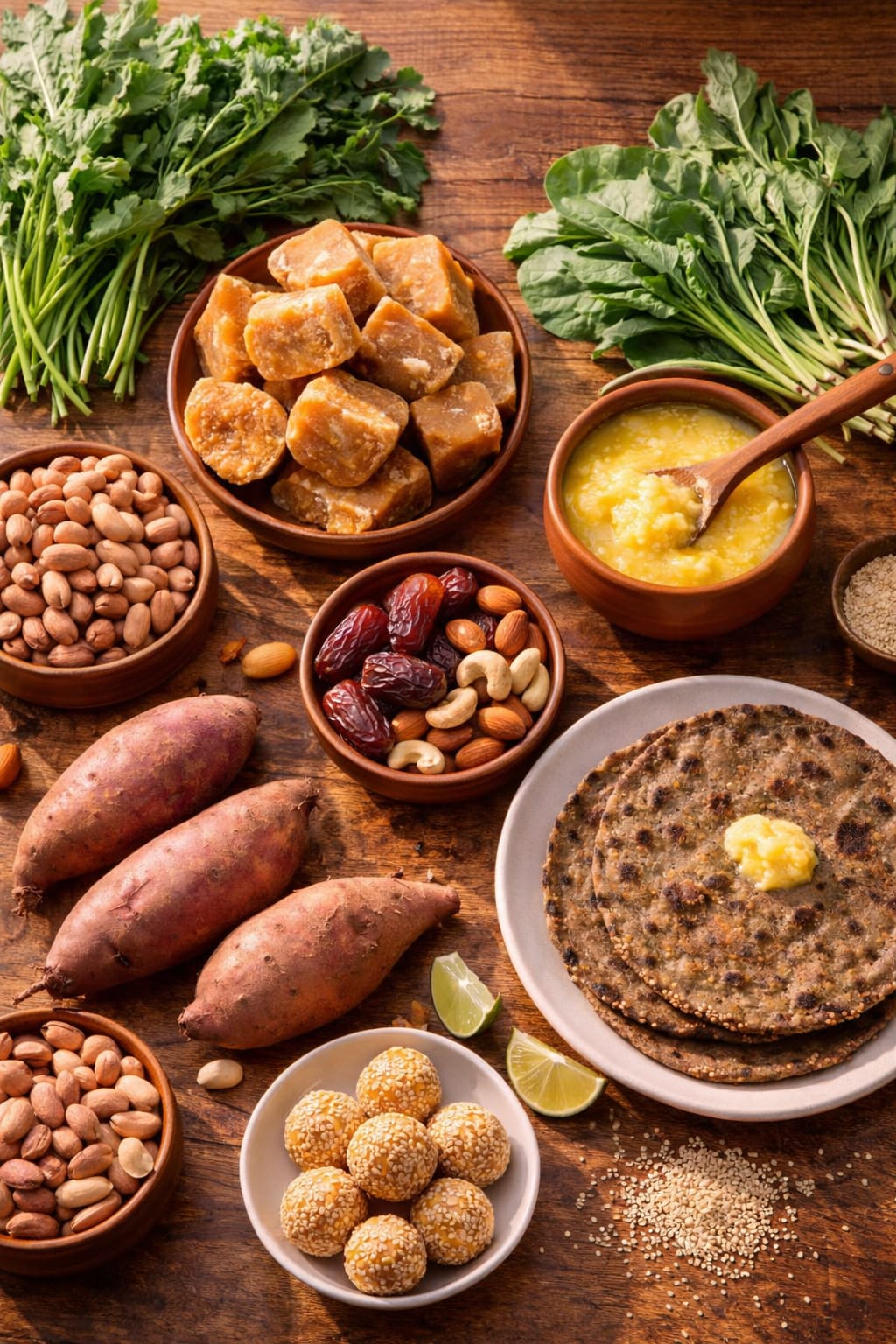
Winter in India brings cold mornings, chilly nights, and a natural craving for warm, comforting foods. Eating the right winter foods can help you stay energetic, cosy, and active during the season. This guide shares the best foods to eat in winter India and how they fit into a healthy everyday routine.
What Are the Best Foods to Eat in Winter?
Winter foods are natural, seasonal ingredients that provide warmth, energy, and comfort during cold weather. These foods are rich in natural oils, heat-producing qualities, and filling nutrients. In Indian tradition, winter foods are specially chosen to help the body adjust to lower temperatures.
Benefits of Eating Winter Foods in Daily Life
Here are some simple lifestyle benefits of winter-friendly foods:
- Provides Warmth
Many winter foods are believed to generate heat in the body. - Boosts Daily Energy
Rich, wholesome foods may help you feel active throughout the day. - Good for Digestion
Warm foods often digest better in cold weather. - Better Immunity Support (General Belief)
In many Indian homes, winter foods are used to keep the body strong. - Seasonal Freshness
Eating seasonal foods helps maintain natural balance and taste.
How and When to Eat Winter Foods?
Morning
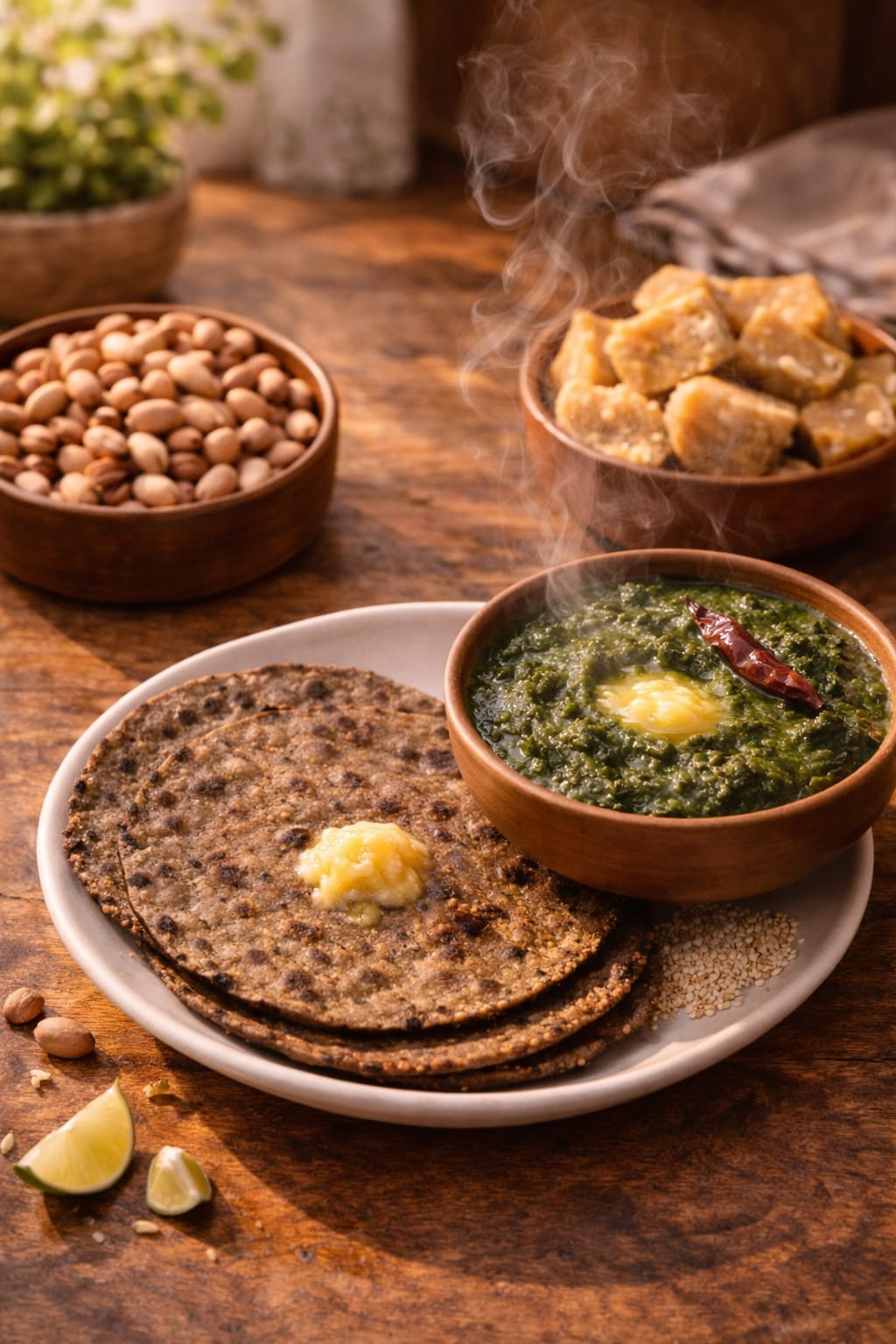
Warm foods like jaggery, ghee chapati, nuts, or haldi doodh may help start the day with comfort.
Afternoon
A wholesome meal with winter vegetables like carrots, leafy greens, and fresh methi works best.
Evening
Warm snacks like roasted peanuts, sweet potato, or bajra roti help you stay cosy.
Night
Warm milk, soups, or light winter vegetables help you sleep comfortably.
General Quantity
Small to medium portions are enough. Winter foods are rich, so avoid overeating.
Best Foods to Eat in Winter in India
Here are the top seasonal foods loved across Indian households:
1. Jaggery (Gur)
Jaggery is traditionally believed to generate heat and support digestion. Most people enjoy it with roti, in churma, or with peanuts.
2. Ghee
A spoon of ghee adds warmth and richness to meals. Many families use ghee on parathas or dal during winter.
3. Nuts & Dry Fruits
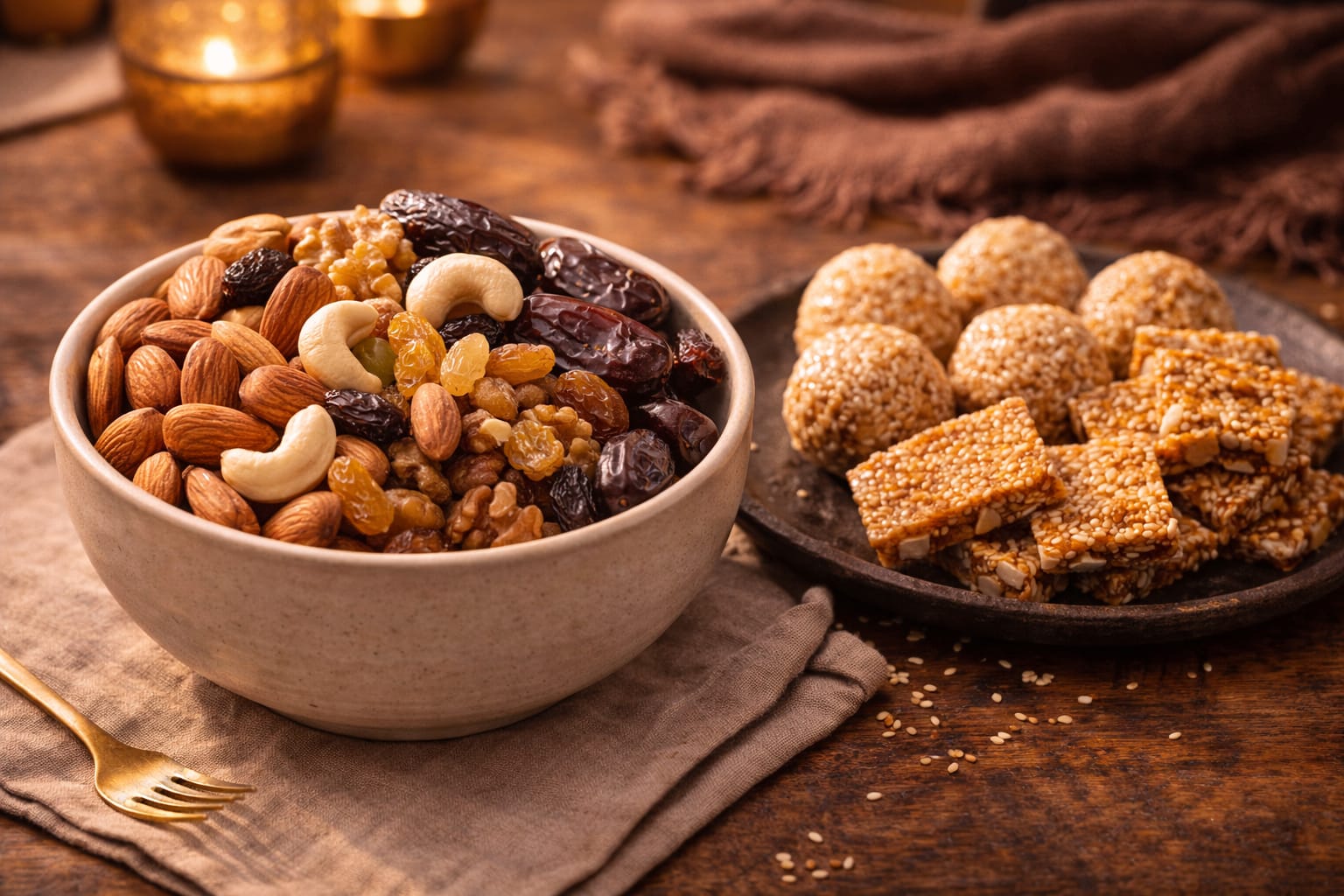
Almonds, cashews, walnuts, dates, and raisins give natural energy. They are popular winter snacks.
4. Sesame (Til) & Til Ladoo
Til is considered warming in Indian tradition. Til ladoos are widely enjoyed during winter festivals.
5. Sweet Potatoes (Shakarkandi)
Sweet potatoes provide steady energy. Roasted sweet potatoes are a popular winter street food.
6. Bajra Roti
Bajra is a classic winter grain. It keeps you full for hours and works well with ghee and jaggery.
7. Carrots
Red winter carrots are used in gajar ka halwa, soups, and salads. They add natural sweetness and warmth.
8. Sarson ka Saag
A traditional winter dish in North India. Served with makki roti, it provides warmth and fullness.
9. Green Leafy Vegetables
Methi, spinach, and bathua are abundantly available in winter. They support digestion and daily nourishment.
10. Winter Fruits
Fruits like oranges, amla, apple, and guava help keep you refreshed and hydrated.

Side Effects or Things to Keep in Mind
- Winter foods are often rich, so avoid overeating.
- Use ghee and jaggery in moderation.
- If nuts feel heavy, reduce the quantity.
- Avoid eating too many fried snacks.
- People sensitive to heat-producing foods should balance portions.
Real-Life Examples or Traditional Uses
- Indian homes make gajar ka halwa, til ladoo, and methi paratha during winter.
- Roasted peanuts and chikki are common snacks in the season.
- Winter weddings often include rich foods like sarson saag and makki roti.
- Elders give haldi milk at night for warmth.
- Many people carry dry fruits in tiffins for steady energy.
Conclusion
Winter foods in India offer warmth, steady energy, and seasonal nourishment. Adding jaggery, ghee, nuts, bajra, leafy greens, and winter vegetables to your meals can help you stay active and comfortable. Enjoy these foods in moderation to make the most of the season.
Frequently Asked Questions
Q1. Can we eat winter foods at night?
Yes, you can eat winter foods at night, but it’s better to choose lighter options such as soup, warm milk, or leafy vegetables. Very heavy foods like halwa or fried snacks may cause discomfort if eaten right before sleep.
Q2. Can I eat winter foods daily?
Yes, most winter foods can be eaten daily when consumed in moderation. They are seasonal and naturally suited for cold weather.
Q3. Are winter foods good for skin, energy, or digestion naturally?
Winter foods may help indirectly. Warm, seasonal foods are commonly believed to support energy levels, smooth digestion, and natural skin nourishment as part of everyday life.
Leave a Reply