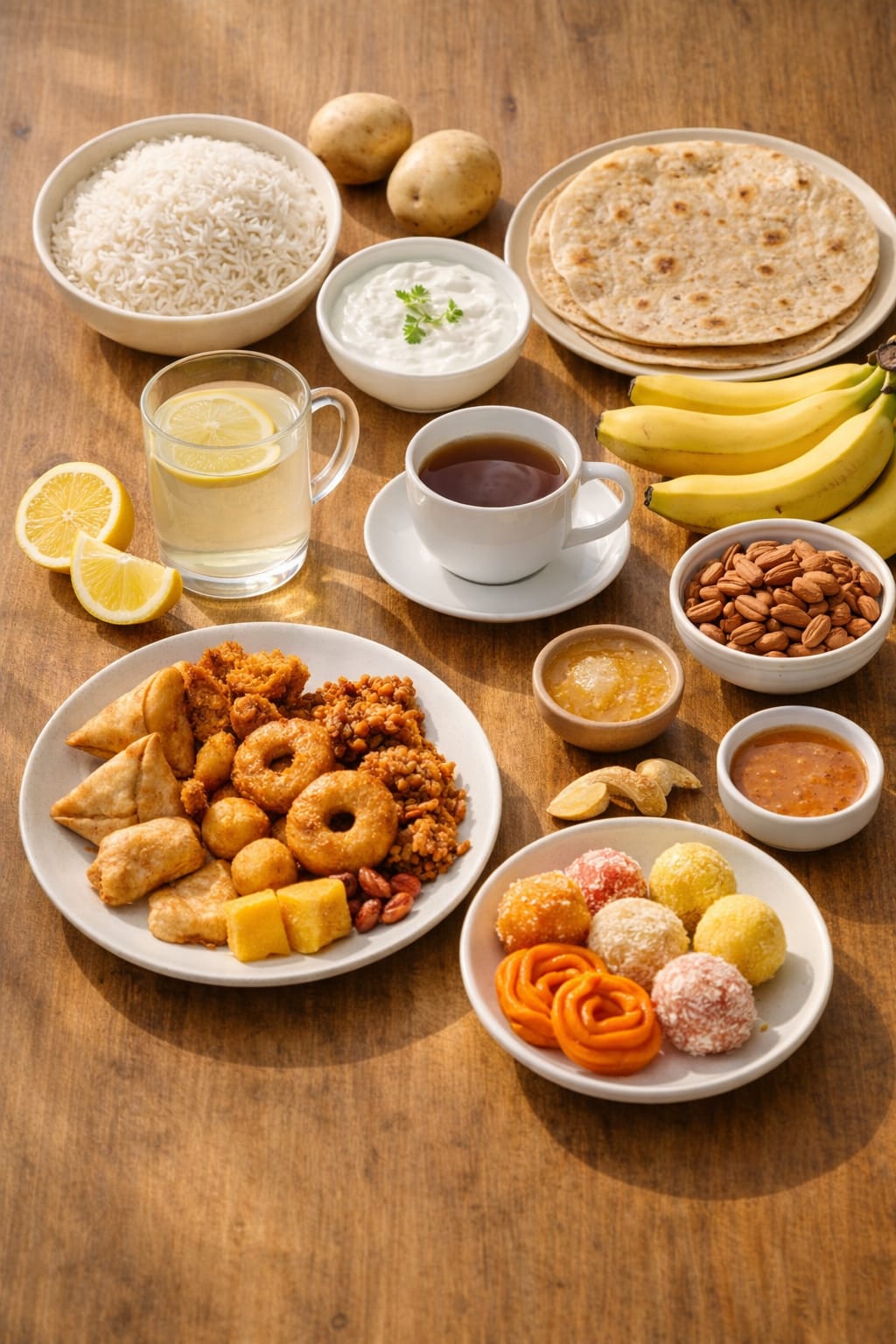
We eat many foods daily without thinking about how they affect our lifestyle, digestion, or energy. While most everyday foods are safe, having too much of something or eating it at the wrong time may cause simple lifestyle discomforts.
This article explains the side effects of common foods in a simple, non-medical way so you can build better eating habits.
What Are the Side Effects of Common Foods?
Side effects of common foods are small, everyday reactions some people may feel when they eat certain items in excess or at the wrong time. These include heaviness, acidity, bloating, dryness, or feeling low on energy.
These do not refer to medical issues—only general lifestyle observations based on common habits and traditional practices.
Benefits of Understanding Side Effects in Daily Life
Knowing how certain foods behave in your body may help you adjust your routine. Here’s how this information helps:
1. Better Digestion
You can avoid foods that feel heavy or slow down your day.
2. Balanced Energy
Foods eaten at the wrong time may make you feel dull or sleepy.
3. Better Skin & Hydration
Some snacks and drinks may cause dryness or imbalance if overused.
4. Improved Eating Timing
Helps you choose what to eat in the morning, afternoon, or night.
5. Simple Lifestyle Awareness
You understand traditional wisdom like “curd at night feels heavy” or “too much tea makes you dehydrated.”
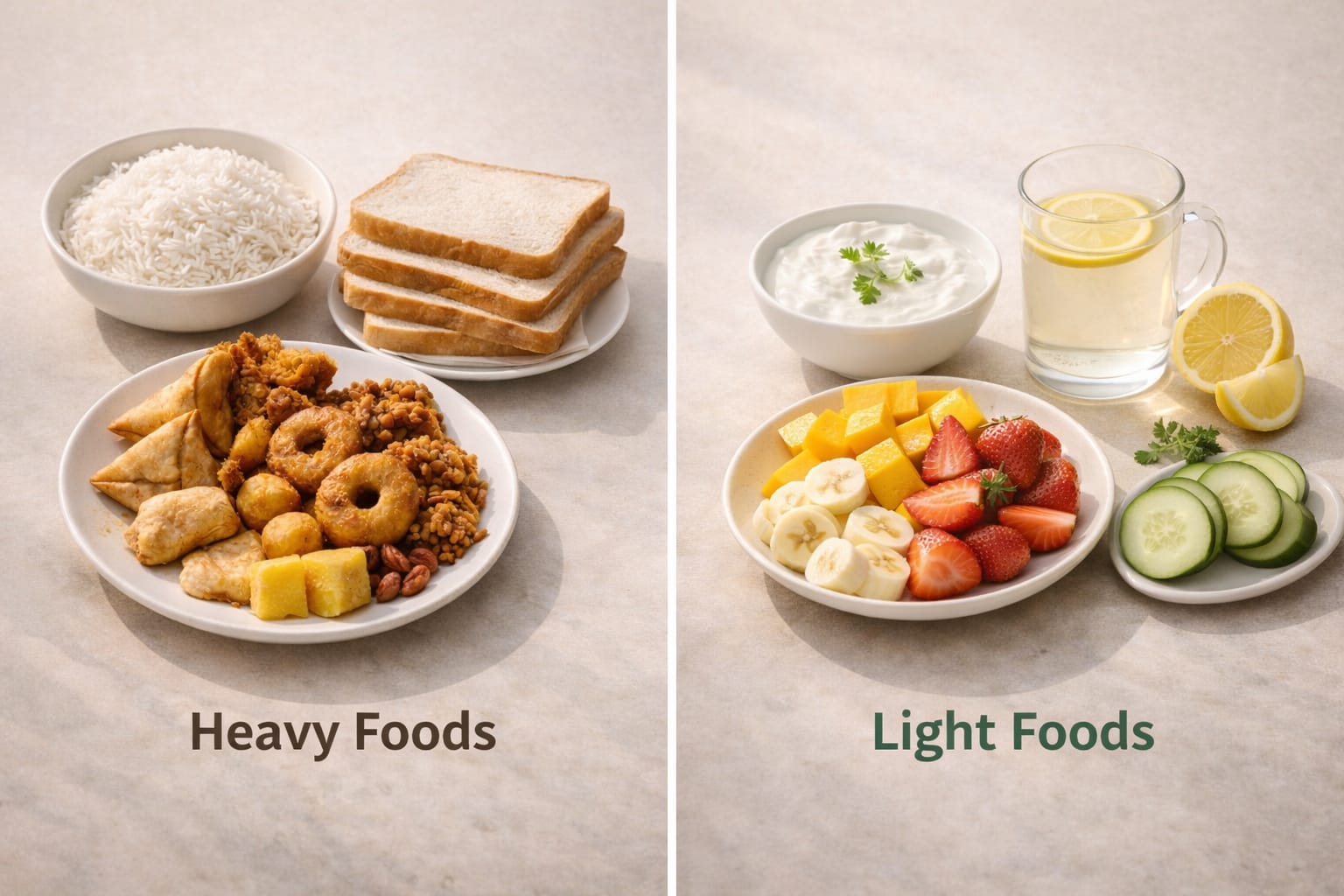
Common Everyday Foods and Their Possible Side Effects
These side effects are based on general lifestyle experiences, not medical conditions.
1. Rice
- May feel heavy at night for some people
- Can make you feel sleepy after lunch
2. Bread (Maida)
- Often causes bloating if eaten too much
- May feel heavy when eaten late at night
3. Tea
- Too many cups may cause dryness or acidity
- Can disturb sleep if taken late evening
4. Coffee
- May create restlessness if consumed in excess
- Can reduce appetite temporarily
5. Banana
- Some people feel bloated at night
- Better eaten in the morning or afternoon
6. Curd
- Traditionally avoided at night as it may feel cooling and heavy
- Can cause mild throat discomfort for some people
7. Potatoes
- Too much may cause heaviness
- Fried versions may reduce energy later
8. Fried Snacks
- May cause sluggishness
- Often leads to dryness or thirst
9. Sweets
- Quick energy but sudden drop later
- May increase craving for more sweets
10. Lemon Water
- Too sour for an empty stomach for some
- Can irritate the throat if taken very cold
11. Peanuts
- May feel too heavy if eaten late at night
- Excess can cause dryness
12. Milk
- Can feel heavy if taken immediately after meals
- Some people feel sleepy after drinking it
13. Turmeric Milk
- Too much turmeric may feel strong
- Best taken at night, not morning
14. Green Tea
- May cause restlessness if taken on an empty stomach
- Not ideal before sleep
15. Mango
- Traditionally believed to cause heat when eaten in excess
- Best consumed during daytime
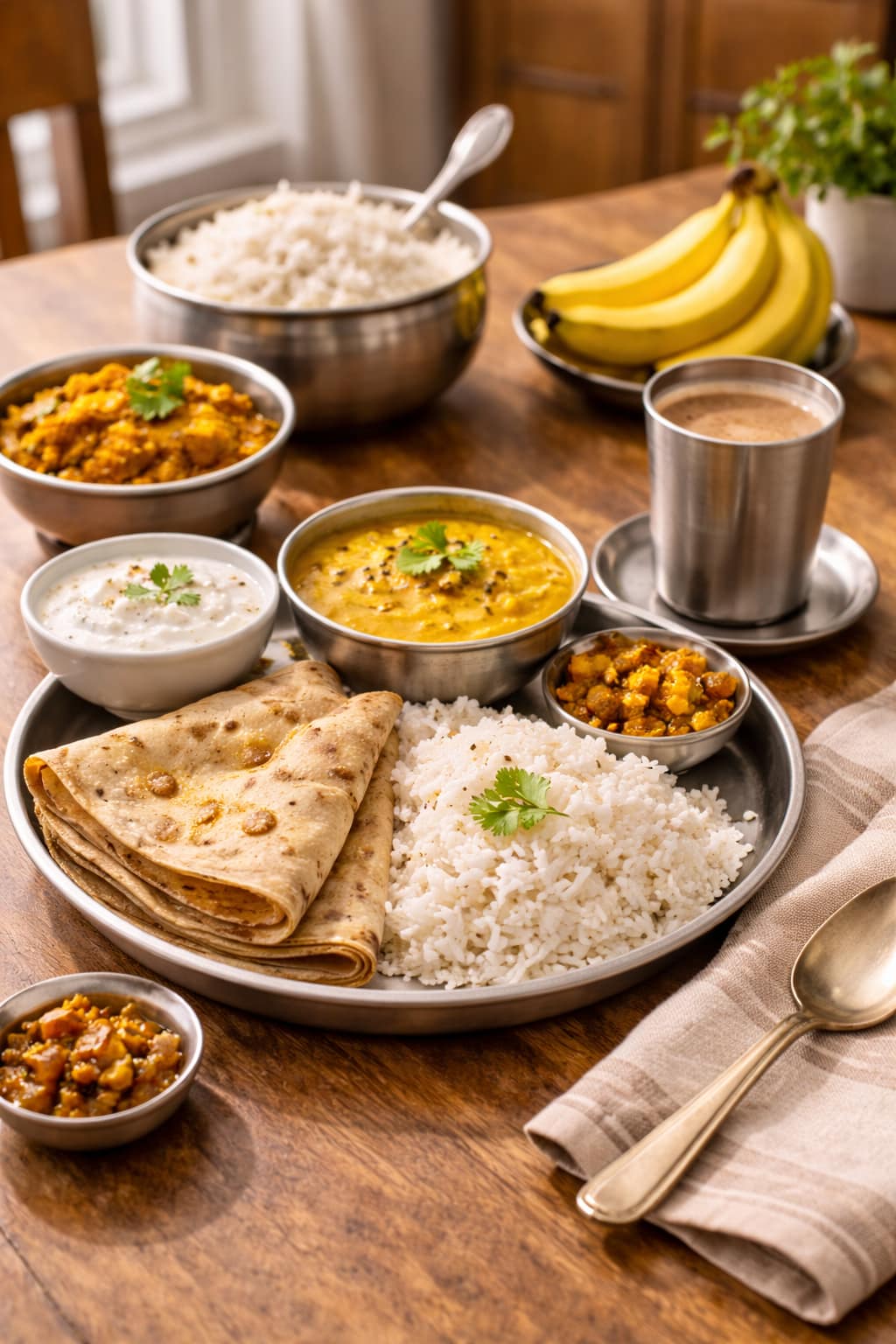
How and When to Use These Foods? (Timing Tips)
Morning
- Lemon water
- Banana
- Poha/upma
- Green tea
- Wheat bread (limited)
Afternoon
- Rice with dal
- Curd
- Fruits
- Light vegetables
Evening
- Tea or coffee (before 6 PM)
- Light snacks
- Fruits like apple or pear
Night
- Milk
- Roti with sabzi
- Light khichdi
General Quantity
Small, comfortable portions work best for most people.

Side Effects or Things to Keep in Mind
These are simple lifestyle suggestions:
- Avoid fried foods late at night—they may cause heaviness.
- Too much tea or coffee may lead to dryness or disturbed sleep.
- Fruits like banana or mango may feel heavy at night for some people.
- Curd is commonly avoided at night due to its cooling nature.
- Drinking too many sweet drinks may cause energy drops.
- Eating very sour foods on an empty stomach may cause mild acidity.
Always listen to your body and eat based on your comfort.
Real-Life Examples & Traditional Uses
In Indian Homes:
- Curd rice is taken at lunch because it feels light and cooling.
- Turmeric milk is common at night for warmth.
- Poha or upma is preferred in the morning for smooth digestion.
- Lemon water is taken early morning for freshness.
- Green tea is popular in offices for light detox-like feeling.
Seasonal Habits:
- Mangoes in summer mornings
- Peanuts in winter evenings
- Buttermilk in hot afternoons
- Soups in winter nights
These habits come from tradition and everyday comfort, not medical instructions.
Conclusion:
Common foods are safe and part of our daily routine. However, eating them mindfully—at the right time and in the right quantity—can help you feel lighter, energetic, and more comfortable throughout the day. Always adjust your eating habits based on your body’s signals and lifestyle needs.
Frequently Asked Questions
Q. Can we eat banana at night?
A. Some people feel heavy or bloated after eating a banana at night, so it’s usually better in the morning or afternoon. However, if bananas suit your digestion and don’t disturb your sleep, you can eat them at any time.
Q. Is it okay to drink tea on an empty stomach?
A. Drinking tea on an empty stomach may cause acidity or dryness for some people. Many prefer having tea after a small snack or breakfast to avoid discomfort.
Q. Can we eat curd every day?
A. Yes. Curd is eaten daily in many Indian households, especially during lunch, as it feels cooling and aids digestion. Some people avoid it at night if it feels heavy.
Q. Are fried snacks bad if eaten daily?
A. Eating fried snacks every day may make you feel sluggish, dry, or thirsty. It’s better to enjoy them occasionally and balance your diet with fruits, nuts, or home-cooked snacks.
Q. Is lemon water safe every day?
A. Yes. Many people drink lemon water daily for hydration and freshness. If it feels too sour on an empty stomach, you can have it after breakfast or dilute it with more water.